
SUNWILL Blow Bar Material Grade Codes & Applications
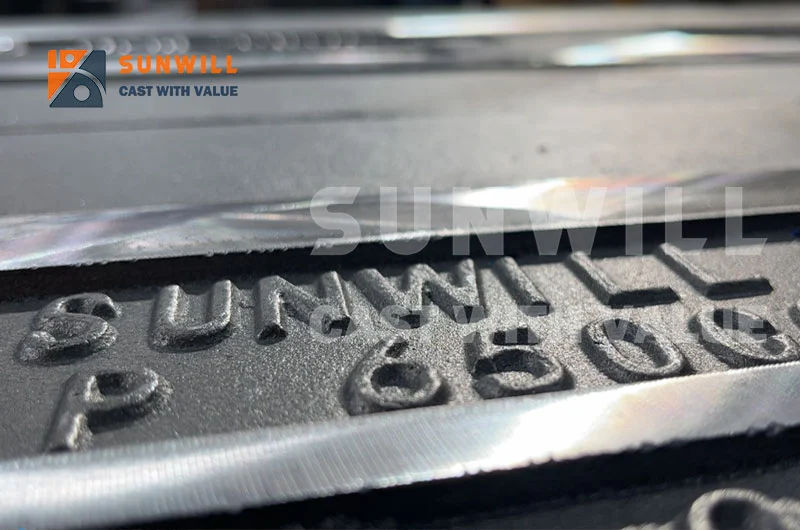
SUNWILL Blow Bar Material Grade Codes & Application Matrix
Procurement managers rarely get three identical quotes. They get three that look nothing alike. Sarah, a plant buyer for a Midwest aggregates operator, opened three supplier proposals for impact crusher blow bars last spring. One listed a competitor OEM number. The second used a raw chemistry code. The third simply said “Premium Ceramic Grade C.” Sarah had no clean way to compare them, which is exactly why a clear blow bar material grade chart matters before you ever request a quote.
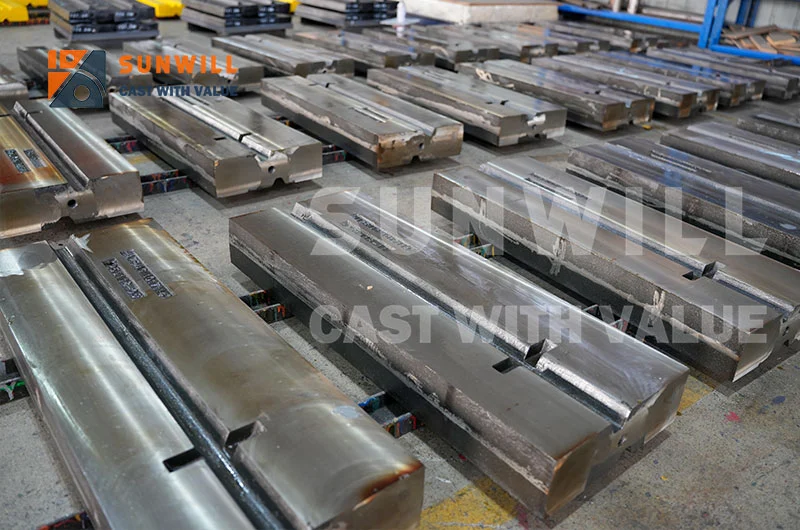
That confusion costs plants real money. When suppliers speak different dialects, buyers lose leverage and crushers risk costly mismatches. This article presents the complete SUNWILL blow bar material grade reference, a single standardized system that maps every blow bar material grade to its composition, reinforcement, feed size limit and typical application. You will find all eight SUNWILL standard grades plus our customized options explained in plain language, so you can match any crushing job to the right code and request a quote vendors can actually honor.
If you arrived from our failure analysis guide or our feed size selection guide, you already know the “why.” This page is the “what to order,” the final stop where product codes meet purchasing decisions.
Key Takeaways
– One readable code system: the leading number signals the matrix (650 high chrome, 550 martensitic, 200 manganese) and the suffix signals the reinforcement (C or X ceramic, TI TiC carbide).
– Eight standard grades cover limestone, granite, basalt, asphalt, river pebble, concrete recycling and blasted limestone across feed sizes from below 300 mm to unlimited.
– Ceramic composite blow bar grades 650C and 700CX deliver the longest wear life on abrasive rock, while the 550 martensitic family accepts the largest feed and the toughest impact.
– 200MN represents the industry standard high manganese category (ASTM A128 type); SUNWILL’s manganese focus is the enhanced 200MNTI with TiC rods for superior wear life.
– Every SUNWILL grade is produced under the CAST WITH VALUE promise, and non standard sizes and matrix tweaks are available through our customized solutions program.
Skip the theory? If you already know your rock type and feed size, our blow bar selection by feed size guide maps those inputs straight to candidate grades. Or scroll to the complete matrix below.
Why a Standardized Grade Code Matters
Walk into any crusher wear parts marketplace and you meet four languages at once. Some vendors quote by OEM part number that only means something if you own that machine. Others quote raw chemistry percentages that say little about field performance. A third uses trademarked names that differ foundry to foundry. The fourth invents in house codes with no published meaning.
This chaos is expensive. When Sarah could not line up her three proposals, she risked buying the wrong bar for her feed or paying a premium for a grade she did not need. If your current bars are failing early, our guide to blow bar failure causes explains how material mismatch drives most premature wear.
SUNWILL impact crusher blow bar material codes solve this with one readable system. The first digits tell you the base matrix. The letters that follow tell you the reinforcement. A buyer who sees “650C” instantly knows the base is high chrome and the upgrade is C type ceramic. No translation required, no private dictionary to memorize.
That transparency pays off three ways: procurement compares quotes on equal terms, maintenance orders the right part without a catalog, and engineers specify metallurgy with confidence. Every SUNWILL grade behind these codes is produced under the same promise: CAST WITH VALUE. We engineer for cost per ton, not just for the lowest sticker price, and we publish what each code means so you can verify the value yourself.
The SUNWILL Blow Bar Grade Matrix (Complete Reference)
The table below is the master reference for all SUNWILL blow bar grades. Bookmark it. Every section that follows expands one row into a working profile with selection logic.
| Material | Code | Reinforcement | Blow bar applied | Feed size control | Typical application |
|---|---|---|---|---|---|
| High chrome | 650 | N/A | All | <300mm | Limestone, granite, asphalt, basalt, river pebble crushing. Please keep us advised when crush river pebbles to adjust for better performance. |
| High chrome + Ceramic | 650C | C-type ceramic | Height >60mm | <300mm | Limestone, granite, asphalt, basalt, river pebble crushing (river pebble requires tuning). |
| High chrome + Ceramic | 700CX | X-type ceramic | Height >60mm | <300mm | Extremely abrasive stones e.g. high silicon rocks |
| Martensitic | 550 | N/A | All | <600mm | Concrete recycling, limestone crushing quarry. |
| Martensitic + Ceramic | 550MC | C-type ceramic | Height >60mm | <600mm | Concrete recycling, limestone crushing quarry. |
| Martensitic + Ceramic | 550MC+ | C-type ceramic | Height >100mm | <400mm | Concrete recycling, limestone crushing quarry. |
| Manganese | 200MN | N/A | All | Not limited | Blasted limestone crushing in quarry |
| Manganese + Tic | 200MNTI | Tic carbide rod | Height >60mm | Not limited | Blasted limestone crushing in quarry |
Two quick notes. “Blow bar applied” means the minimum bar height the grade is designed for. Ceramic and TiC reinforced grades need enough section height to seat the inserts, so they show a minimum height rather than “all.” “Feed size control” is the maximum recommended single feed dimension; exceed it and impact stress can exceed what the matrix tolerates. Our full material specs and composition guide explains the chemistry behind each family.
High Chrome Family: 650, 650C, 700CX
High chrome irons win on abrasion resistance and shrug off the cutting action of silica rich rock. The trade off is brittleness, so the whole family is capped at feed below 300 mm and is not recommended where large tramp iron is expected.
650 High Chrome (The Versatile Baseline)
Specs: High chrome white iron, Cr above 20 percent, above 60 HRC, no ceramic, all bar heights, feed below 300 mm.
The 650 is the workhorse of the SUNWILL high chrome line and the grade most quarries start with for secondary and tertiary HSI duty. Use it as your default when the rock is abrasive but clean and the feed is screened below 300 mm.
One warning the application note carries for good reason: when you crush river pebbles, tell us first. River pebble hardness and silica vary widely, so we tune the matrix chemistry before casting. A note in your order prevents a premature failure.
Ready to confirm your chemistry? Our blow bar material specs and composition guide breaks down the alloying strategy behind 650 and its ceramic siblings.
650C High Chrome + C-Type Ceramic (Wear-Upgraded 650)
Specs: High chrome white iron, Cr above 20 percent, above 60 HRC matrix with ceramic above 1400 HV, C type ceramic, bar height above 60 mm, feed below 300 mm.
The 650C takes the 650 matrix and embeds a C type ceramic lattice across the wear face, placing ultra hard cells exactly where abrasion bites hardest. Choose it over 650 when wear life, not first cost, controls your budget. Ceramic composite blow bar grades like 650C routinely outlast plain high chrome by multiples in abrasive service because the ceramic resists the sliding wear that eats a monometal bar. Industry wear studies report several times longer life in clean, abrasive feeds. The 650C needs a bar height above 60 mm so the ceramic structure seats correctly; if your bars are thinner, stay on 650 or ask us about a custom section.
700CX High Chrome + X-Type Ceramic (Maximum Wear)
Specs: High chrome white iron, Cr above 20 percent, above 60 HRC matrix with X type ceramic above 1400 HV, bar height above 60 mm, feed below 300 mm.
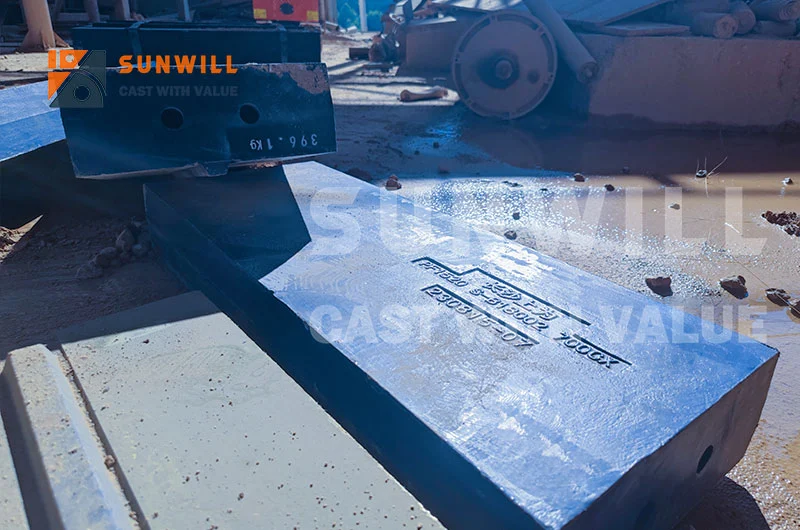
The 700CX sits at the top of the high chrome pyramid, swapping in the more aggressive X type ceramic lattice for maximum wear resistance on the most punishing rock. Reach for it when 650C still wears too fast: high silicon granite, quartz rich river gravel and other extreme abrasives are its home turf. For hard rock quarry programs specifically, our hard rock quarry blow bars resource covers feed preparation and crusher settings that protect ceramic grades. The choice between 650C and 700CX is a wear severity call: moderate duty leans 650C, rock that destroys 650C in a season leans 700CX. The 650, 700CX and 550MC blow bar configurations together cover most abrasive and mixed duty quarry work, which is why they are the three codes our sales team quotes most often.
Martensitic Family: 550, 550MC, 550MC+
Martensitic alloy steels trade some hardness for a large gain in toughness. That toughness is what lets the family accept feed up to 600 mm, far beyond the high chrome cap, and survive impact that would shatter a brittle bar.
550 Martensitic Alloy Steel (The Balanced Option)
Specs: Martensitic alloy steel, Cr above 4 percent, above 53 HRC, no ceramic, all bar heights, feed below 600 mm.
The 550 is the balanced all rounder. Notice the feed window: where high chrome stops at 300 mm, 550 runs to 600 mm because martensite absorbs impact through controlled toughness while high chrome cracks under heavy shock. If your feed is unscreened, mixed with rebar, or simply large, 550 is the safer base.
Mini story. A concrete recycling yard in the Ohio River valley was burning through a competitor’s standard martensitic bar every three weeks because rebar and oversize chunks overloaded it. SUNWILL moved them to 550MC. Changeout stretched from three weeks to roughly two months, and emergency downtime fell to near zero.
550MC Martensitic + C-Type Ceramic
Specs: Martensitic alloy steel, Cr above 4 percent, above 53 HRC matrix with ceramic above 1400 HV, C type ceramic, bar height above 60 mm, feed below 600 mm.
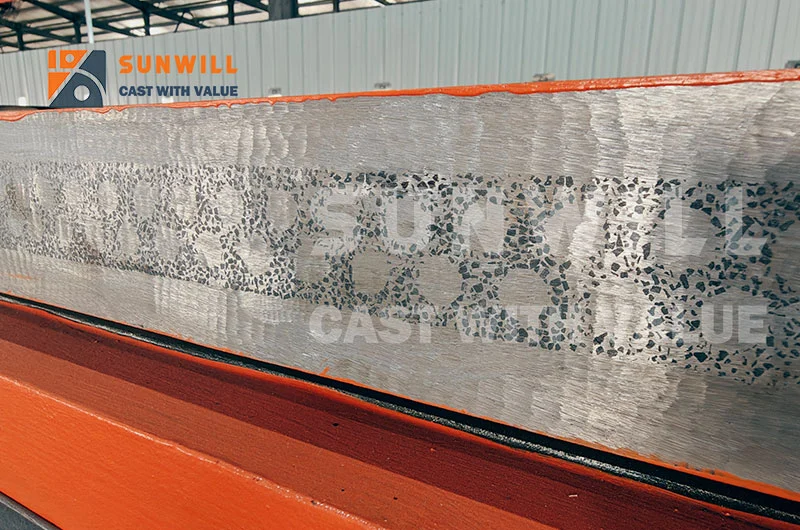
The 550MC adds C type ceramic to the 550 matrix, marrying martensitic toughness with ceramic wear resistance on the leading edge. This is the grade for abrasive material that still carries impact risk: recycling with light rebar, quarry limestone with occasional oversize, or any duty wanting ceramic life without high chrome brittleness. It is the most versatile ceramic grade because its matrix tolerates the largest feed of any ceramic option.
Want ceramic life with impact safety? Talk to our engineers about 550MC for your recycling or mixed feed line.
550MC+ Martensitic + C-Type Ceramic (Heavy-Duty)
Specs: Martensitic alloy steel, Cr above 4 percent, above 53 HRC matrix with ceramic above 1400 HV, C type ceramic, bar height above 100 mm, feed below 400 mm.
The 550MC+ is the heavy duty cousin, same ceramic concept as 550MC but engineered for large section bars on big machines. Because the section must exceed 100 mm, 550MC+ suits large rotor impactors where bar mass helps absorb shock. Feed is capped at 400 mm (tighter than 550MC’s 600 mm) because the heavy duty layout targets sustained large volume duty rather than occasional oversize.
Manganese Family: 200MN, 200MNTI
Manganese steel brings the ultimate in impact toughness. It work hardens under repeated impact, so its surface hardens the longer it runs while the core stays ductile. That makes it the pick for the dirtiest, most tramp laden feeds.
200MN Standard Manganese Steel
Specs: High manganese austenitic steel, Mn above 13 percent, above 250 HB as supplied (work hardens well beyond that in service), no reinforcement, all bar heights, feed not limited.
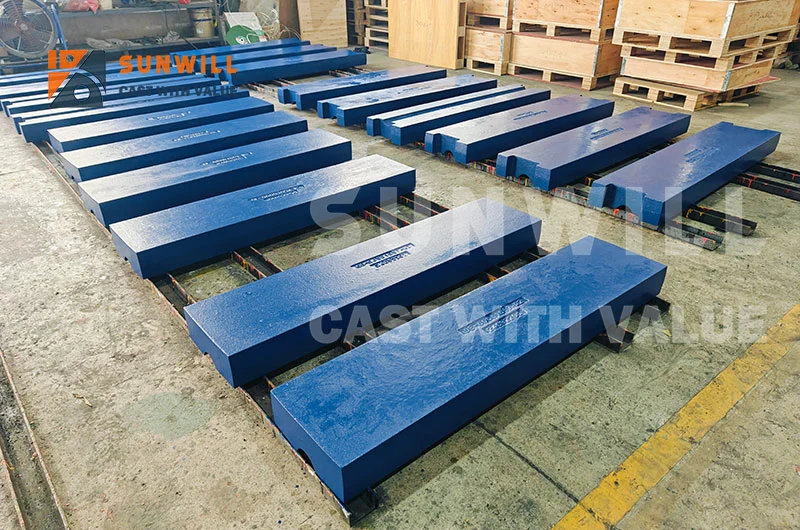
The standout property is unlimited feed size. No other family accepts uncrushable and oversize material so willingly, because each impact densifies the surface toward 500 HB plus while the core absorbs shock without cracking.
Important clarification on this code. The 200MN label denotes the general high manganese steel class used across the industry, not a SUNWILL exclusive formulation. SUNWILL’s manganese development focus is the enhanced grade below, 200MNTI, which adds TiC carbide rods for dramatically better wear life. If your operation requires standard Mn13 class manganese, SUNWILL can supply it on a project basis, but it is not the first recommendation we lead with. For most buyers we steer toward 200MNTI unless a plain manganese spec is contractually required.
200MNTI Manganese + TiC Carbide Rods (SUNWILL Signature)
Specs: High manganese austenitic steel, Mn above 13 percent, above 250 HB matrix with TiC rods above 63 HRC (roughly 2800 to 3200 HV), TiC carbide rods, bar height above 60 mm, feed not limited.
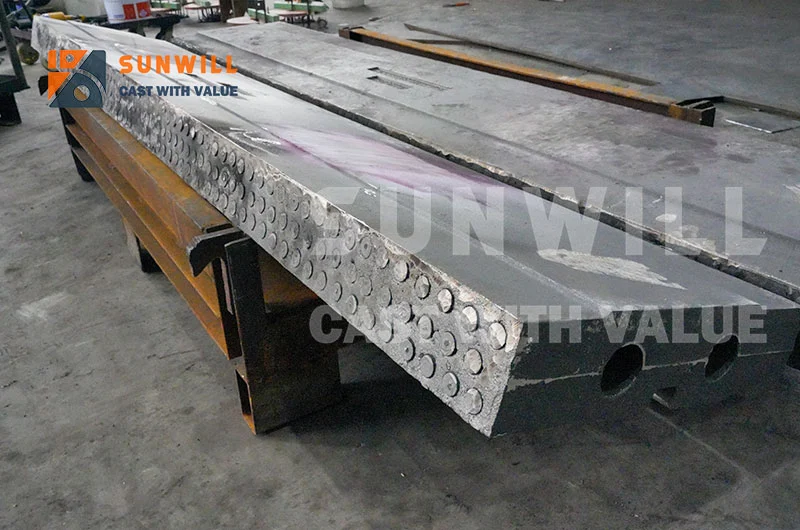
The manganese tic blow bar specification centers on the TiC rods. Titanium carbide is among the hardest engineering ceramics, measuring around 2800 to 3200 HV and above 63 HRC in rod form. The rods sit in the high wear crests and edges. As the surrounding manganese work hardens and wears preferentially, the rods protrude slightly and shield the matrix, a self reinforcing pattern that extends life well beyond plain manganese.
Why this is the SUNWILL signature. Standard high manganese wins on toughness but loses on wear rate. Plain TiC bars (or full ceramic) win on wear but can be brittle. The 200MNTI keeps the manganese matrix’s impact toughness, unlimited feed tolerance and tramp immunity, then adds a hard phase exactly where abrasion does the damage. Composite wear data shows TiC reinforced manganese blow bars running one and a half to two and a half times longer than plain manganese in matched applications.
Mini story. A primary crushing quarry in Southwest China ran blasted limestone with heavy tramp and no practical feed control. Plain high chrome shattered; plain manganese wore out in days. SUNWILL supplied 200MNTI bars tuned to the rotor. The manganese matrix shrugged off the tramp and oversize, while the TiC rods held the wear crests. The operator reported wear life several times longer than the previous plain manganese bars, with zero brittle failures. For that duty profile, 200MNTI was the only grade that satisfied both the toughness and the wear demands.
If your crushing sits in the high impact, no feed control, abrasive edge wear zone, 200MNTI is the candidate to test first.
See the TiC advantage on your next order? Request a 200MNTI quotation and tell us your crusher model and feed.
Customized Solutions Beyond Standard Grades
The eight grades above solve the large majority of jobs, but not everything. SUNWILL also offers customized solutions tailored to your need for optimal wear resistance by adjusting the matrix material or the specially designed ceramic structures.
A custom program starts with one of three triggers: an unusual feed chemistry no standard grade addresses, a crusher model with a non standard bar pocket, or field data showing a specific wear pattern (edge wear but not face wear) that a tailored ceramic layout would fix better than a stock grade.
Our engineers customize two ways. First, we adjust the matrix by shifting chromium, molybdenum or carbon to bias toward wear or toughness for your rock. Second, we redesign the ceramic structure, changing cell density, depth or placement so the hard phase sits on your highest stress zone. The result is a bar built around your operation, not a catalog average.
Mini story. A Sichuan aggregate producer crushing 100 to 300 mm high silica limestone was getting only about 80,000 tons of life from standard high chrome bars. SUNWILL engineers visited the site, analyzed the feed and impact parameters, then delivered a ceramic reinforced high chrome solution tuned to that silica profile. Service life climbed to roughly 210,000 tons per set. The upgrade was not a stock code off the shelf; it was a tailored matrix and ceramic design built from the quarry’s own data. That is the CAST WITH VALUE promise in action: we do not just sell you the nearest grade, we engineer the right one.
Have a wear problem no stock grade solves? Send us your application details and our engineers will scope a customized solution.
How to Choose Your SUNWILL Grade: Quick Selection Guide
If you have read our blow bar selection by feed size guide, you already narrowed the field by feed dimension and material. This guide is the last step: turning those inputs into a specific SUNWILL code.
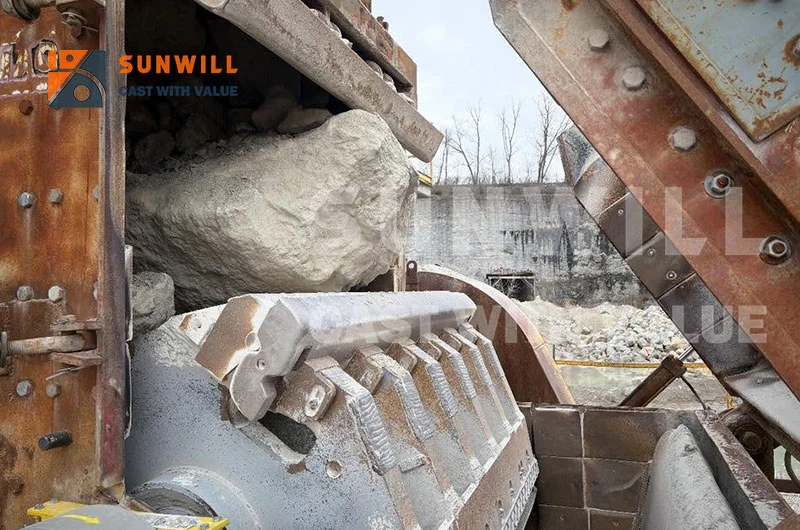
Step 1. Pick the matrix family from your feed and risk profile.
– Clean, abrasive rock, screened feed below 300 mm, no tramp iron risk: choose the High Chrome family (650, 650C, 700CX).
– Mixed or large feed up to 600 mm, some rebar or oversize, impact risk present: choose the Martensitic family (550, 550MC, 550MC+).
– No feed control, heavy tramp, blasted rock, maximum toughness needed: choose the Manganese family (200MN, 200MNTI).
Step 2. Decide whether you need ceramic or TiC reinforcement.
– You want the lowest first cost and the duty is moderate: take the base grade (650, 550, or 200MN class).
– You want maximum wear life and the bar height supports inserts: add ceramic (650C, 700CX, 550MC, 550MC+) or TiC (200MNTI).
– Rule of thumb: if you change bars more than once a month, the upgrade grade almost always wins on cost per ton.
Step 3. Confirm the exact code against the constraints.
– Check blow bar height against the “applied” column. Ceramic and TiC grades need height above 60 mm (550MC+ needs above 100 mm).
– Check feed size against the “control” column. High chrome stops below 300 mm; martensitic runs larger; manganese is unlimited.
– Match the application note. River pebble on chrome? Tell us to tune. High silicon rock? Move up to 700CX.
Fast lookup. Feed controlled below 300 mm and clean? High Chrome: 700CX for extreme abrasion, 650C for max life, or 650 for value. Feed large or dirty with impact risk? Martensitic: 550MC for ceramic life with impact safety, or 550MC+ for big rotors. No feed control, tramp heavy? Manganese: 200MNTI for wear life or the 200MN class for a plain spec. Still unsure? Our engineers are who to ask.
Grade Cross-Reference (Competitive Mapping)
Buyers often arrive with a competitor or OEM code and ask what SUNWILL grade matches. The honest answer: mapping is possible, but it must be done carefully. OEM and competitor codes rarely publish full chemistry or reinforcement method. A rival “Ceramic Grade C” might mean C type or X type ceramic, in a chrome or martensitic matrix, with unknown insert density. Guessing from a name risks the wrong matrix in your crusher.
SUNWILL recommends a three input mapping. First, share the competitor code and any datasheet you have. Second, share your crusher model and bar drawing so we can confirm fit and section height. Third, share a worn bar or feed sample so we can read the actual wear mechanism. With those, our technical team maps the competitor grade to the nearest SUNWILL code, or designs a custom grade if nothing standard fits.
A few safe general mappings hold most of the time. Plain high chrome OEM bars map to 650. Chrome plus ceramic maps to 650C or 700CX depending on the ceramic type. Martensitic OEM bars map to 550, and martensitic plus ceramic to 550MC or 550MC+. Plain manganese maps to the 200MN class, while TiC enhanced manganese maps to 200MNTI. These are starting points, not final specs.
When tramp iron or odd wear shows up, also review our impact crusher wear troubleshooting guide to separate material mismatch from machine setting problems before you switch grades.
Conclusion: Pick the Code, Then Let Us Engineer It
SUNWILL blow bar grades exist to remove the guesswork Sarah faced at the top of this page. One code system, seven standard grades plus a specialized manganese option, and a customization program. The matrix tells you the base, the suffix tells you the reinforcement, and the application note tells you the job.
The conversion endpoint of this series is simple. You learned why bars fail, how feed size gates your choices, and what each material is made of. Now you know the exact codes to order, whether that is a 650C for abrasive limestone, a 550MC for recycling with rebar, or a 200MNTI for tramp heavy primary duty.
Send us four things and we will return a professional grade recommendation, not a generic catalog page:
1. Your material (rock type, silica content if known)
2. Your feed size (max dimension and whether it is controlled)
3. Your crusher model (OEM and model, or the bar drawing)
4. Your current failure problem (short life, breakage, edge wear, or unknown)
Email those details to our team or use the form at SUNWILL Contact. We will map your job to the right SUNWILL code, confirm bar fit, and quote with the CAST WITH VALUE engineering behind every grade. When your next blow bar changeout comes, make it the one where you ordered by code instead of by hope.
Ready to order by code? Send your four point spec to SUNWILL and get a graded recommendation this week.
For hands on guidance during the swap, our blow bar replacement procedure guide walks through safe installation so you protect your new grade from day one.
impact crusher side liner wear## Standards and Authoritative References
- ASTM A128 / A128M-19(2025), Standard Specification for Steel Castings, Austenitic Manganese – the governing specification for manganese steel grades (including Mn13/Mn14/Hadfield family) discussed in this article.
OEM vs aftermarket wear parts
Frequently Asked Questions
How do I choose between 650 and 650C?
Pick 650 when feed is clean and abrasive but cost sensitive, and you change bars on a predictable schedule. Pick 650C when wear life drives your budget and the bar height exceeds 60 mm. The ceramic cells in 650C resist sliding abrasion far better than plain chrome, so 650C typically lasts several times longer in abrasive service even though it costs more up front. If 650C still wears too fast on very high silica rock, move to 700CX.
What is the difference between 200MN and 200MNTI?
200MN represents the industry standard high manganese steel class (Hadfield type, ASTM A128 style), with Mn above 13 percent and unlimited feed tolerance. 200MNTI is SUNWILL’s enhanced manganese with TiC carbide rods embedded in the wear zone. Both keep manganese’s impact toughness and unlimited feed, but 200MNTI adds a hard phase that extends wear life one and a half to two and a half times beyond plain manganese in matched applications. SUNWILL leads with 200MNTI for most manganese duty; the 200MN class is supplied on a project basis when a plain spec is required.
Will the ceramic inserts fall out or break off?
No, not in correct application. The ceramic cells are cast into the molten matrix during pouring, so they are metallurgically bonded rather than glued or mechanically trapped. The matrix absorbs impact while the ceramic carries the wear. Failure risk rises only when the grade is misapplied, for example putting a high chrome ceramic bar in feed with large tramp iron. That is why we cap high chrome ceramics at feed below 300 mm and steer tramp heavy duty to the martensitic or manganese families.
Can you make non standard sizes?
Yes. Beyond the seven standard grades, SUNWILL offers customized solutions that adjust matrix composition or ceramic structure for specific applications. Non standard bar pockets, unusual crusher models, and tailored ceramic layouts are all within scope. Send your drawing or crusher model and our engineers will scope it.
What feed size can each SUNWILL grade handle?
High chrome grades (650, 650C, 700CX) are capped below 300 mm feed. Martensitic grades run larger: 550 and 550MC below 600 mm, 550MC+ below 400 mm. Manganese grades (200MN, 200MNTI) accept unlimited feed because the matrix tolerates oversize and tramp. Always match the “feed size control” column in the matrix to your real feed, not your ideal feed.
How do I map a competitor or OEM code to a SUNWILL grade?
Share the competitor code and any datasheet, your crusher model or bar drawing, and a worn bar or feed sample. Our technical team maps it to the nearest SUNWILL code or designs a custom grade. Plain high chrome maps to 650, chrome plus ceramic to 650C or 700CX, martensitic to 550 or 550MC, and TiC manganese to 200MNTI. Treat these as starting points until confirmed against real specs.