
Crusher Hammers & Hammer Heads: Material Selection Guide
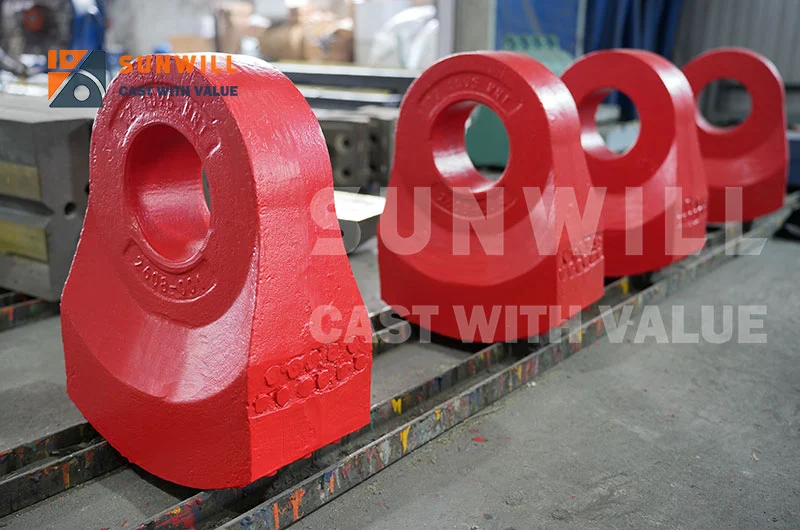
Crusher Hammers & Hammer Heads Guide
A cement plant in eastern China was swapping its crusher hammers every 19 days. Each changeout idled the line for six hours and tied up a three person crew. The steel itself was cheap. The real expense was the lost clinker throughput, about [VERIFY] tonnes per stoppage, plus the weekend overtime that came with every unplanned shutdown. Most plants tolerate this because they buy hammers by the kilogram instead of by the tonne crushed.
You already know that hammer wear drives your maintenance cost more than almost any other crusher component. This guide promises a practical path to longer hammer life and fewer stoppages. We cover what crusher hammers and hammer heads are, how they differ from shredder hammers, the four material families Sunwill casts, how to match material to your feed, and how to plan replacements. By the end you will be able to specify hammers with confidence and avoid the trial and error cycle that drains budgets.
★ Crusher hammers should be bought on cost per tonne crushed, not cost per kilogram of steel. A cheaper hammer that lasts half as long is the expensive option.
What Are Crusher Hammers and Hammer Heads?
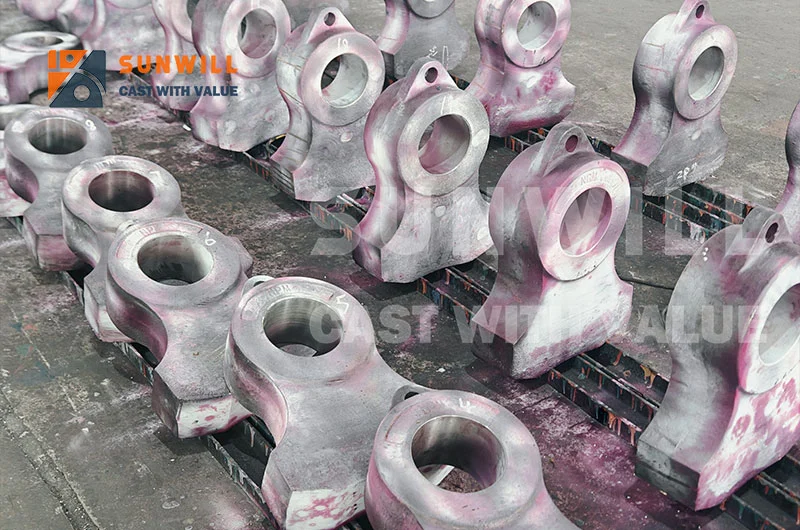
Crusher hammers, also called hammer heads, are the rotating impact elements inside a hammer mill or a hammer type impact crusher. They pivot or lock onto a rotor and strike the feed at high speed, shattering it against the breaker plate or grate. The head is the wear tip, the part that contacts the rock. The hammer includes the head plus the mounting shank or bore that secures it to the rotor.
The basic principle is straightforward. A high speed rotor carries hammers that beat material against a casing until it is small enough to pass through a screen or grate. The hammer mill entry on Wikipedia describes this same physics, and it applies directly to the single rotor and reversible hammer crushers used in cement, limestone, coal and aggregate plants.
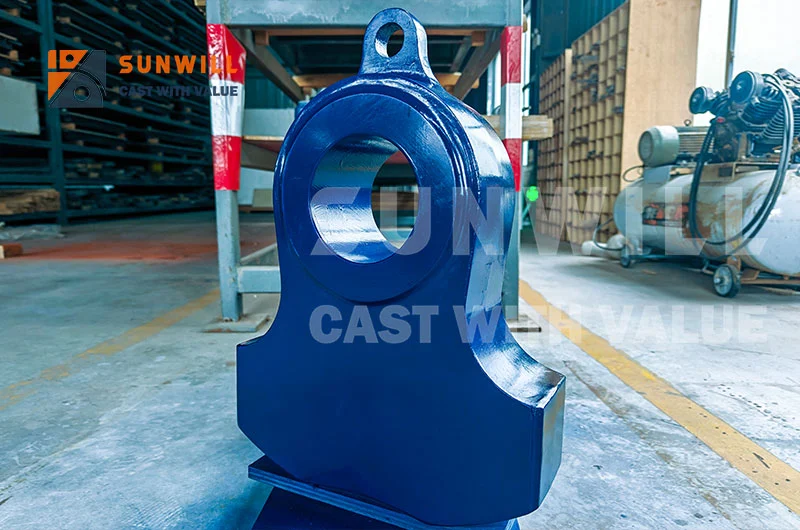
A crusher hammer head lives a hard life. It sees impact loads that can exceed [VERIFY] MPa on tramp events, plus sliding abrasion as rock grinds across the tip. The core challenge is that no single material wins on both fronts. High hardness resists abrasion but breaks under heavy impact. High toughness survives impact but wears fast. Sunwill’s answer is to offer four distinct grades so you can bias the hammer toward your dominant wear mode.
Where do these parts show up? Hammer crushers are common in:
- Cement raw meal and clinker crushing
- Limestone and gypsum preparation
- Coal and coke crushing for power and steel
- Soft to medium hard ore pre crushing in small mines
- Road base and recycled aggregate plants
If your operation runs any of these, your hammer program is a direct lever on uptime. For a wider view of how hammers fit into a cement operation, see our cement plant wear parts overview.
Crusher Hammers vs Shredder Hammers
This boundary matters, because the two parts are easy to confuse and they solve different problems. Crusher hammers break rock and minerals in a controlled chamber. Shredder hammers tear through scrap metal, tires, and mixed waste in a recycling mill. The feeds, impact energies, and wear modes are different enough that the parts are not interchangeable.
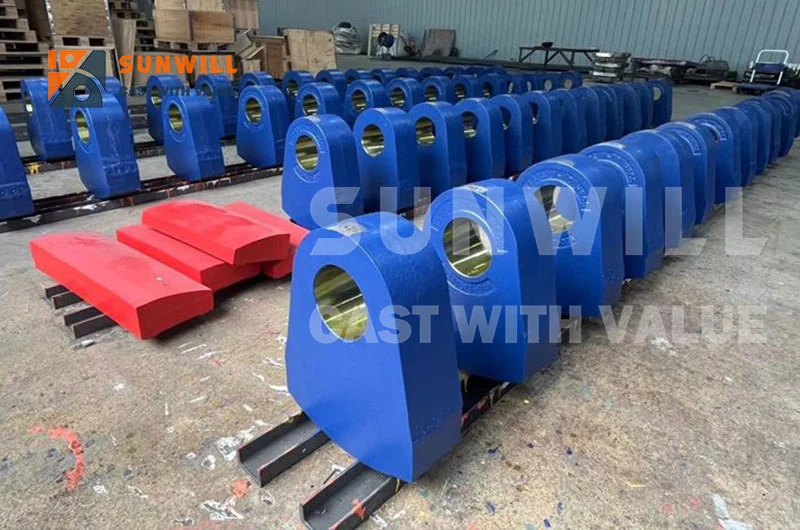
Here is the practical split:
| Factor | Crusher hammers | Shredder hammers |
|---|---|---|
| Typical feed | Limestone, clinker, coal, ore | Steel scrap, MSW, tires |
| Dominant wear | Impact plus sliding abrasion | Impact plus gouging |
| Common grades elsewhere | Hadfield Mn, high chrome | Alloy steel, Bisctruct alloy steel |
| Sunwill grade | Martensitic, high chrome, ceramic insert, bimetal | Outside our crusher scope |
| Geometry | Balanced, often reversible | Heavier, often weld rebuilt |
The takeaway: this article covers crusher hammers and hammer heads only. We do not link shredder hammer articles as Sunwill products, because they sit outside our casting scope. Keep that line clear when you brief your buyers.
Single, Double and Reversible Rotor Hammer Designs
Hammer mills come in a few rotor layouts, and the layout decides how you mount, rotate, and replace the hammers.
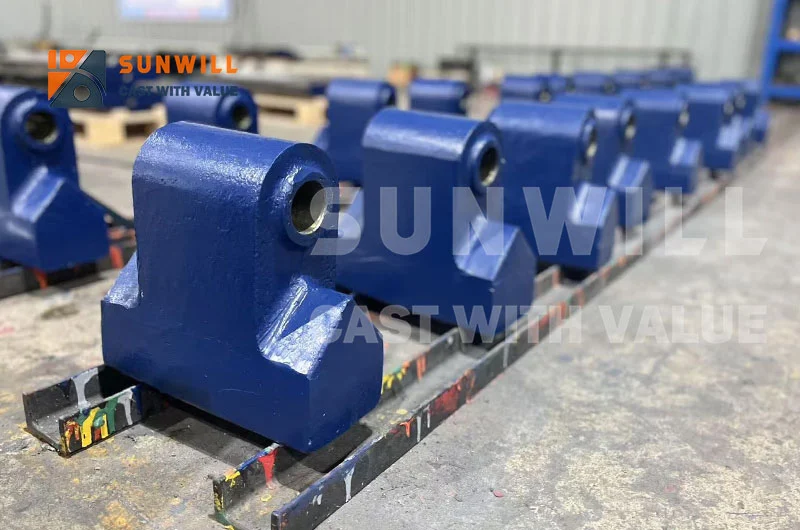
Single Rotor Hammers
The most common design. Hammers pivot on a single rotor shaft and swing freely or lock in place. Wear is heaviest on the leading edge and the tip. When one side is spent, you can rotate the hammer 180 degrees on its pin to use the other face. This simple flip can add [VERIFY] percent to service life at zero extra cost.
Double Rotor Hammers
Two rotors run in series, often counter rotating. The first rotor pre breaks, the second finishes. Double rotor mills produce a finer, more uniform product but put more total impact energy through the hammers. Hammer grade selection here leans toward toughness, because tramp events hit harder.
Reversible Rotor Hammers
The rotor spins in either direction. When wear builds on the forward facing tip, you reverse the rotation and wear the opposite tip. Reversible designs demand perfectly balanced hammers, because an unbalanced rotor at [VERIFY] rpm will shake the foundation. We cover balancing in a later section.
A reversible rotor is only as good as its hammer balance. One overweight hammer on a 1,200 rpm rotor can generate forces that crack the shaft housing. Size the hammers so the working section stays in compression and the impacts stay moderate.
Bore and shank details also vary. Some hammers use a plain round bore on a pin. Others use a square shank that locks rotation so the hammer presents a fixed working face. The mounting style constrains which Sunwill grades are practical, because ceramic insert tips need a stable backing along the full shank.
Materials: Martensitic, High Chrome, Ceramic Insert and Bimetal
This is the section that decides your cost per tonne. Sunwill casts crusher hammer heads in four families. None is high manganese. Each suits a different mix of impact and abrasion.
Martensitic Steel
Martensitic steel gives you toughness with good hardness, typically in the 45 to 55 HRC range. It absorbs heavy impact without fracture and still resists sliding wear better than plain carbon steel. Use it where tramp steel is a real risk or where the feed is variable and unpredictable. It is the default choice for double rotor and recycling adjacent duty.
High Chrome Iron
High chrome white iron, commonly 15 to 26 percent chromium, is extremely hard, often 58 to 65 HRC, and superb against sliding abrasion in limestone, cement raw mix, and coal. Its weakness is brittleness under massive single impacts. Size the hammers so the working section stays in compression and the impacts stay moderate. In clean limestone, high chrome crusher hammers outlast almost everything else.
For the trade offs between these two grades, our high chrome vs martensitic steel comparison breaks down hardness, toughness, and typical life by application.
Ceramic Insert (TIC) Composites
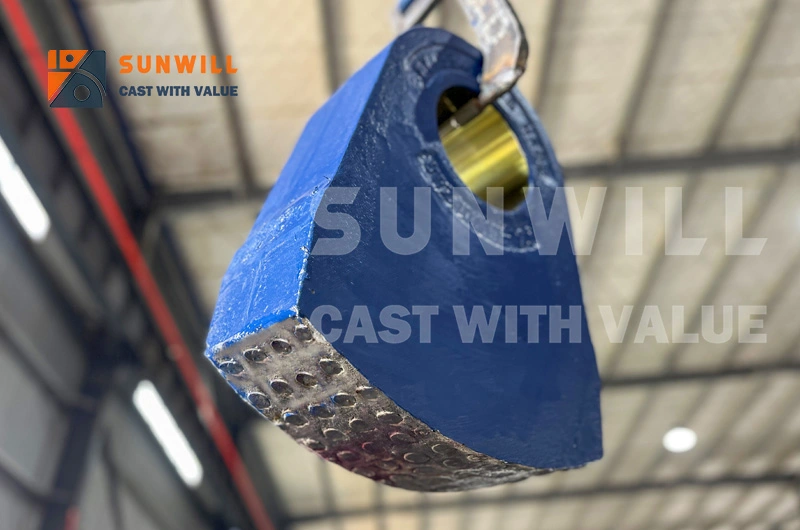
Ceramic insert hammers embed hard ceramic or titanium carbide inserts into a martensitic or high chrome matrix. The matrix takes the impact. The inserts carry the abrasion. Field results show life gains of [VERIFY] percent over monolithic high chrome in tough feeds. These are the premium option for abrasive, variable rock where standard grades wear unevenly.
Bimetal Hammers
Bimetal construction welds or casts a wear resistant working face onto a tough alloy steel backing. You get a hard, abrasion resistant head and a ductile shank that will not snap. A bimetal hammer head is the workhorse for mixed feeds and for plants that have been burned by cracked high chrome.
★ No single grade wins on both impact and abrasion. Pick the grade that matches your dominant wear mode, then use inserts or bimetal construction to cover the second mode.
Material standards matter for incoming inspection. Neutral specifications such as the ASTM abrasion resistant iron and steel standards give you a common language to write into purchase orders. Ask for the relevant ASTM or ISO reference on the certificate so your incoming QC has a yardstick. Sunwill holds ISO 9001:2015 certification, which governs how we document casting, heat treatment, and inspection.
Material Selection by Feed
The fastest way to choose a grade is to start with your feed. Below are four common feeds and the Sunwill grade we reach for first.
Limestone
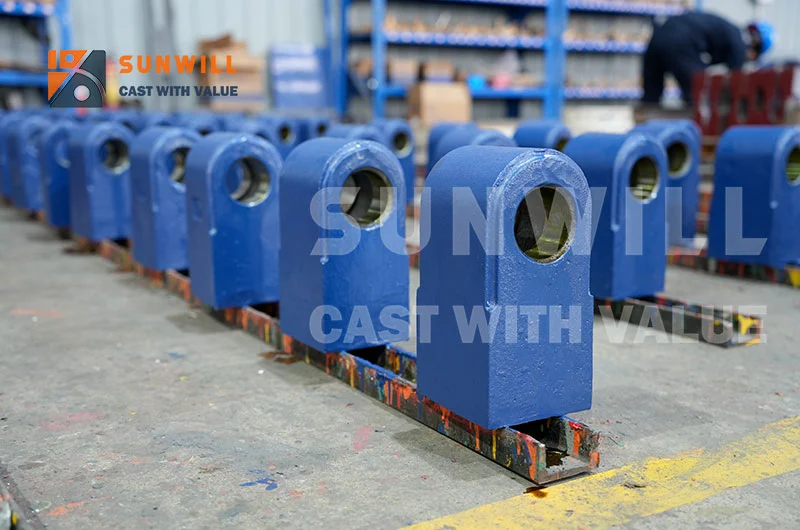
Limestone is moderately abrasive and usually clean. High chrome hammer heads are the first choice and deliver the lowest cost per tonne in steady service. If the quarry sends occasional hard chert or tramp steel, step up to a ceramic insert or bimetal head. Our sand and gravel wear parts guide covers related screening and conveying wear too.
Clinker
Cement clinker is hard, sharp, and hot. It chews through soft grades fast. Martensitic or ceramic insert heads handle the combined heat and abrasion best. High chrome can work but risks thermal shock cracking if the clinker temperature spikes. For the full cement scope, see cement plant wear parts.
A limestone crusher hammer program in Guangxi switched from straight high chrome to bimetal heads after a run of wet, clay bound feed jammed the mill and snapped three heads in a month. The bimetal shanks survived the jams, and wear on the working face stayed within budget. Measured life moved from [VERIFY] days to [VERIFY] days on the same feed. [VERIFY field note]
Coal and Coke
Coal is soft but gritty, and coke is abrasive and can be hot. Martensitic steel is the safe default. Ceramic insert heads pay off in high throughput coke crushing where every extra day between changeouts matters.
Ore (Small Mines)
Low grade ore is the toughest case: high impact, high abrasion, and unpredictable tramp. Bimetal or ceramic insert heads lead here. For broader mining wear strategy, our mining wear parts hub maps hammers to the rest of the comminution circuit.
Hardfacing and Ceramic Insert Upgrades for Longer Life
Two upgrade paths extend hammer life without changing the base grade.
Hardfacing adds a weld deposited wear layer to the working face. It is cheap, fast, and lets a local workshop rebuild a hammer between changeouts. The catch is consistency. Hand hardfacing varies by welder, and a poor bead can spall under impact. Use hardfacing on martensitic heads where you control the procedure.
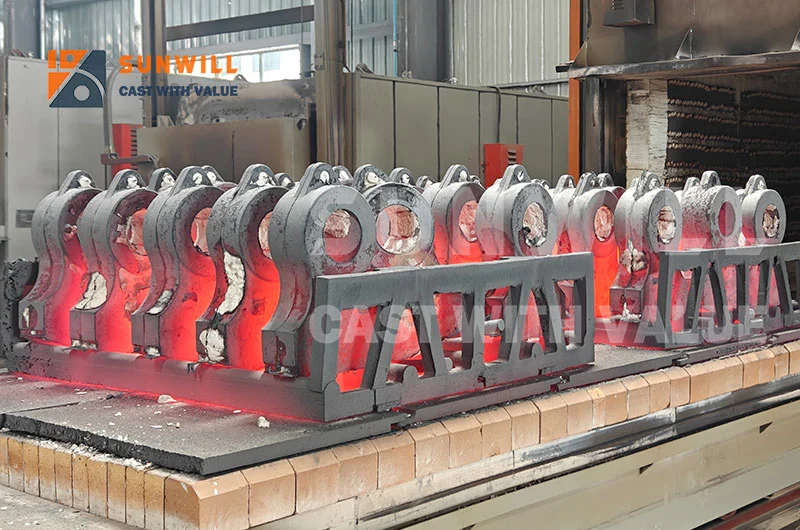
Ceramic insert upgrading is built in at the foundry. Instead of welding, we cast ceramic or TiC inserts into the wear zone so the hard phase is locked in a ductile matrix. This gives uniform, predictable life and avoids the spalling risk of field hardfacing. For abrasive feeds, ceramic insert heads usually beat a hardfaced monolithic head on total cost.
Built in ceramic inserts beat field hardfacing for predictable life, because the hard phase is locked in the matrix at the foundry instead of laid down by hand. When should you upgrade? If your current hammers wear unevenly, with the tip gone while the shank looks new, you are leaving steel on the table. An insert or bimetal design puts the hard material exactly where the wear is. If hammers fracture more than they wear, you need more toughness, not more hardness, so move toward martensitic or bimetal rather than adding ceramic.
Balancing, Installation and Rotation
Poor installation quietly destroys hammers and rotors. Get these three things right.
Balance
Weigh every hammer in a set and group them so opposing rotor positions carry near equal mass. A balanced set keeps vibration low and protects bearings and shafts. Sunwill ships hammers with individual weights stamped on the shank so your crew can pair them. An unbalanced single rotor hammer at [VERIFY] rpm can throw the whole frame out of tolerance within a shift. [VERIFY field note]
A small iron ore operation in Hebei chased a mysterious bearing failure for two months. The cause was a replacement hammer that was [VERIFY] grams heavier than its pair. The rotor whirled slightly off axis, the bearing ate itself, and the plant lost a weekend of crushing. After we supplied weight matched sets and a simple balancing sheet, the failures stopped. [VERIFY field note]
Installation
Use the correct pin or retainer and the specified torque. Loose hammers beat against the rotor and crack the bores. Tight hammers that cannot pivot may concentrate impact on one spot and fracture. Inspect the rotor contact faces for wear before fitting new heads, because a grooved rotor seats hammers poorly.
Rotation
On pivoting and reversible designs, flip or reverse the hammers on a schedule, not when they fail. A planned mid life rotation doubles the working faces you get from one set. Log the rotation date on the work order so the next crew knows the wear state.
OEM Compatibility and Replacement Planning
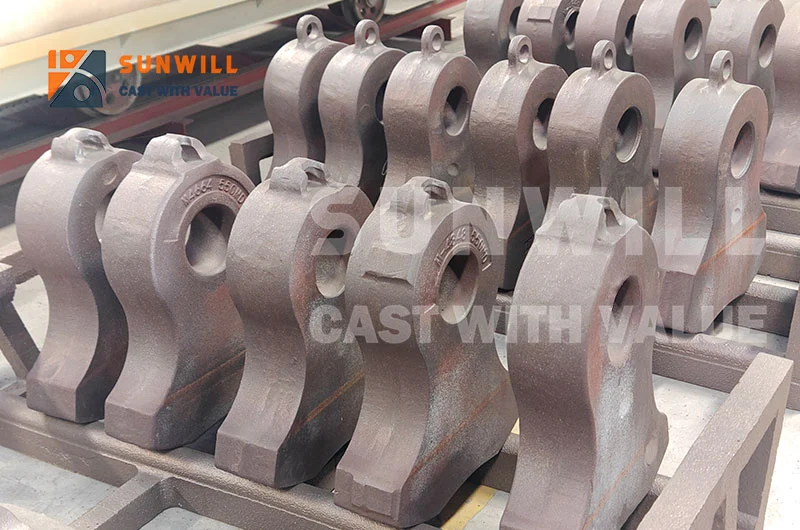
Most hammer mills are built by major OEMs, and Sunwill casts hammers to fit common rotor geometries. We do not need the OEM brand to make a working hammer. We need your rotor drawing, the hammer bore and shank dimensions, and a sample of the wear profile you want to match or improve.
Typical fit work covers:
- Single and reversible rotor hammers for cement and limestone mills
- Coal crusher hammers for power and coke plants
- Ore pre crush hammers for small mining operations
- Custom profiles where you want more wear volume in the tip
Plan replacements around throughput, not the calendar. Track tonnes crushed per set and set a reorder point at, say, 80 percent of average life. Stock one balanced spare set so a failure never idles the line. If you run more than one feed type, keep a grade per feed rather than one compromise grade.
Ready to specify hammers for your exact rotor? Send us your crusher model and a feed sample, and we will return a balanced, weight matched set in the right Sunwill grade. Start from our wear parts FAQ to see the data we need, or review the full cement plant wear parts range.
Frequently Asked Questions
Do crusher hammers and shredder hammers use the same material? No. Crusher hammers break rock and use grades biased to impact plus abrasion. Shredder hammers tear scrap and lean on gouging resistance. Sunwill casts crusher hammers in martensitic, high chrome, ceramic insert, and bimetal grades. We do not cast high manganese steel for either type.
Which hammer grade lasts longest in limestone? High chrome heads lead in clean limestone on cost per tonne. If tramp steel or hard chert appears, move to ceramic insert or bimetal to avoid fracture.
Can Sunwill match my OEM hammer dimensions? Yes. Send the rotor drawing and the hammer bore, shank, and wear profile dimensions. We cast to fit and ship weight matched sets for balanced rotation.
How often should hammers be rotated? On pivoting or reversible rotors, rotate on a planned schedule at roughly half expected life, not after failure. This doubles the working faces per set.
Is hardfacing or ceramic insert better? Ceramic insert heads give more predictable life because the hard phase is locked in the matrix at the foundry. Field hardfacing is cheaper and flexible but depends on welder skill and can spall.
Conclusion
Crusher hammers and hammer heads decide a large share of your crushing cost, yet most plants buy them by weight instead of by performance. The path to lower cost is simple to state and harder to do without the right grade: match the material to your dominant wear mode, balance the set, rotate on schedule, and plan replacements by throughput.
Recall the four Sunwill grades: martensitic for impact, high chrome for abrasion, ceramic insert for the toughest mixed feeds, and bimetal for fracture prone service. Pick by feed, not by catalogue price, and you will stop the Saturday shutdowns.
★ The cheapest hammer is the one that crushes the most tonnes before it comes out of the rotor. Buy on cost per tonne, and let the kilogram price take care of itself.
Ready to put numbers on your current hammer cost? Pull your last three changeout records, then talk to our engineering team about a balanced, weight matched set in the right grade. Review the mining wear parts hub or the wear parts FAQ to get started, and turn your next hammer order into your longest running one yet.