Gyratory Crusher Concave Segments: SUNWILL Foundry
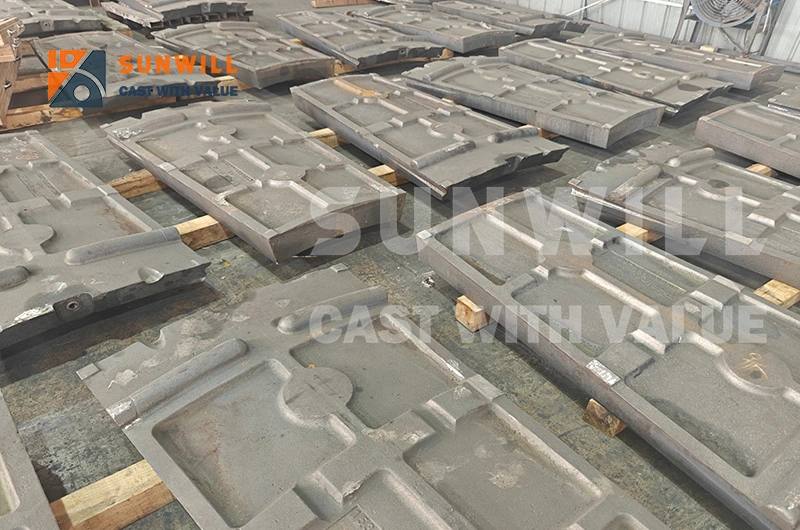
Gyratory Crusher Concave Segments: Liners Built for the Fixed Concave
Primary gyratory crushers carry the heaviest duty in a comminution circuit. At the center of that duty sits a part many buyers underestimate: the concave segments. These are the fixed liners that line the upper shell of the crusher, arranged in rows around the crushing chamber. As the mantle gyrates inside them, rock is squeezed, fractured, and drawn downward. When the concaves wear out, throughput drops and power draw climbs. Getting the concave segments right is one of the highest leverage decisions in a primary crushing operation.
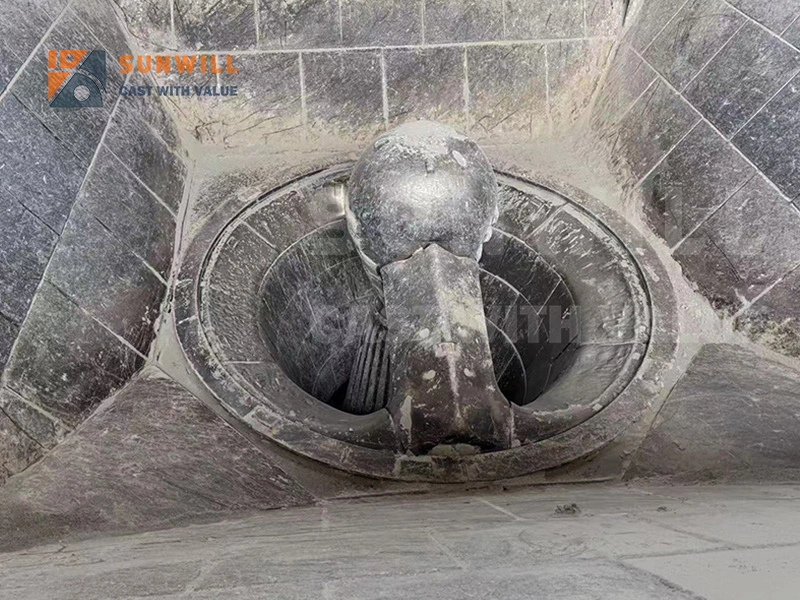
This article focuses on exactly that. We cover the concave segments that SUNWILL manufactures, the three wear zones inside them, and how material grade selection by zone keeps a gyratory running longer for less. If you are comparing suppliers or planning a liner changeout, the sections below should give you a clear, practical framework.
What Are Gyratory Concave Segments
A gyratory crusher has two working surfaces. The mantle is the moving cone at the center. The concave is the fixed lining around it. Rock is crushed in the gap between the two as the mantle swings in a steady, eccentric motion.
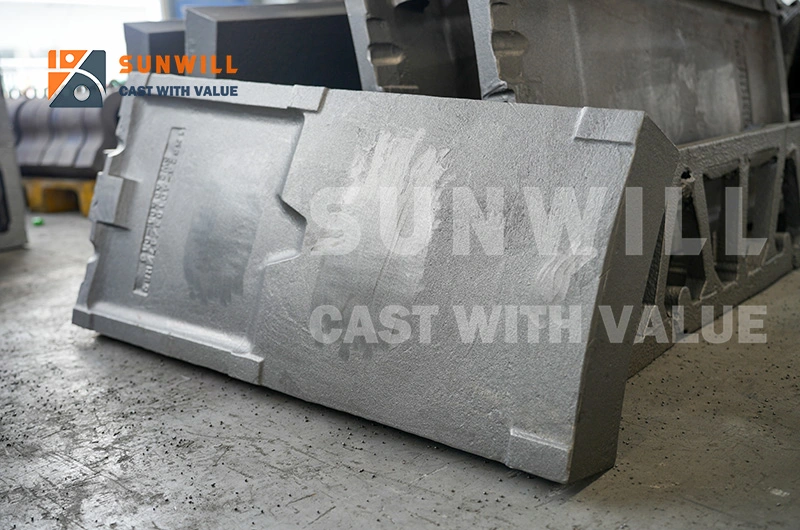
The concave is not a single piece. It is built from multiple segments, and those segments are stacked in horizontal rows that wrap the upper shell. Depending on the crusher size and design, a full concave set can be made of two, three, or more rows. The top row sits at the feed opening where the rock enters. The lower rows form the narrowing throat where final sizing happens before material discharges.
Why build it in segments instead of one giant ring? Three reasons stand out. Segmented construction is easier to handle and install. A worn row can be changed without pulling the whole set. And segmentation lets the foundry match a different material grade to each zone, because each row wears for a different reason. That last point is the heart of this article.
SUNWILL manufactures the fixed concave segments. We do not make the mantle, the spider cap, the arm liners, the rim liners, or the bottom shell liners. Our focus is the concave, and within the concave, the discipline of selecting the right grade for each row.
Why the Concave Wears in Three Zones
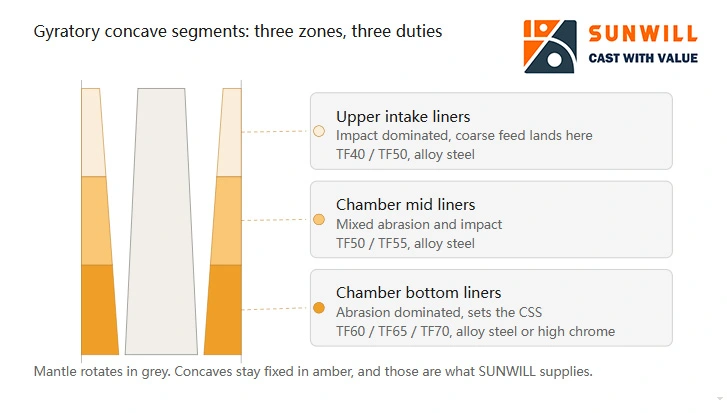
The crushing chamber is not uniform. A piece of ore enters at the top, gets nipped, and travels down through tightening geometry while being compressed thousands of times per hour. The forces at the top are not the forces at the bottom. That is why a single material across the whole concave is a compromise, and why we split the concave into three working zones.
Upper Intake Liners
The top row is the intake zone. This is where the largest, hardest feed lands first. The dominant failure mode here is impact. A boulder dropped from a haul truck or a tramp piece of steel can strike the liner with enormous energy. The material in this zone must absorb that shock without cracking or spalling.
For the upper intake, we use alloy steel. Alloy steel gives the toughness needed to survive heavy impact while still offering reasonable wear resistance. In many circuits this single row takes the most abuse per ton of feed, so its toughness budget matters more than its hardness.
Chamber Mid Liners
The middle rows sit where crushing is most active. Rock is being compressed and sheared continuously, so this zone sees a mix of impact and abrasion. The liner must resist both, because a crack here propagates and a groove here steals capacity.
We use alloy steel in the chamber mid as well, but often at a higher hardness level than the intake. The balance shifts from pure toughness toward wear resistance, because impact energy is lower than at the top while sliding abrasion is higher.
Chamber Bottom Liners
The bottom rows form the discharge throat. By the time rock reaches this zone it is smaller and the chamber is tightest. The dominant wear mechanism is abrasive sliding as material is squeezed through the narrow gap. Hardness wins here.
For the chamber bottom we can specify either alloy steel at high hardness or a high chrome white iron, depending on the ore and the duty. High chrome grades deliver excellent resistance to abrasive sliding, which is exactly the challenge at the throat.
Material Selection by Zone
The table below shows the TF grade family we use for concave segments. These are SUNWILL specifications, selected to match each zone’s wear profile. Note that the high chrome grades are specified to ASTM A532 with a Modified qualifier, because we tailor the chemistry and heat treatment to the application rather than casting a generic standard grade.
| Grade | Base material | Spec reference | Hardness (HB) | Charpy impact (RT, KV, J) | Typical zone |
|---|---|---|---|---|---|
| TF40 | Alloy Steel 40CrNiMo | EN 10293 (06/2005) | 375 to 425 | greater than 15 | Upper intake |
| TF50 | Alloy Steel 40CrNiMo | EN 10293 (06/2005) | 475 to 525 | greater than 10 | Upper to mid |
| TF55 | Alloy Steel 40CrNiMo | EN 10293 (06/2005) | 525 to 575 | greater than 10 | Chamber mid |
| TF60 | Alloy Steel 45CrNiMo Modified | Modified spec | 525 to 575 | balanced | Mid to high wear |
| TF65 | Chrome White Iron | ASTM A532 II B Modified | greater than 600 | application specific | Chamber bottom |
| TF70 | Chrome White Iron | ASTM A532 III A Modified | greater than 600 | application specific | Chamber bottom, high abrasion |
A few notes on reading this table. The alloy steels (TF40 through TF60) are the workhorses for impact dominated zones. As the number rises, hardness rises and the grade suits zones further down the chamber. The high chrome grades (TF65, TF70) are the abrasion specialists for the throat, where sliding wear dominates and impact is lower.
This is a zone based strategy, not a one grade fits all approach. In a typical three row concave we might run TF40 or TF50 at the top, TF55 in the middle, and TF65 or TF70 at the bottom. The result is that each row wears at a similar rate, so you change rows on a schedule instead of watching one zone fail while another still has life.
The Economics of Single Row Replacement
One of the most practical advantages of segmented concaves is selective replacement. Because the concave is built in rows, a plant does not have to pull the entire set when only the bottom row is gone.
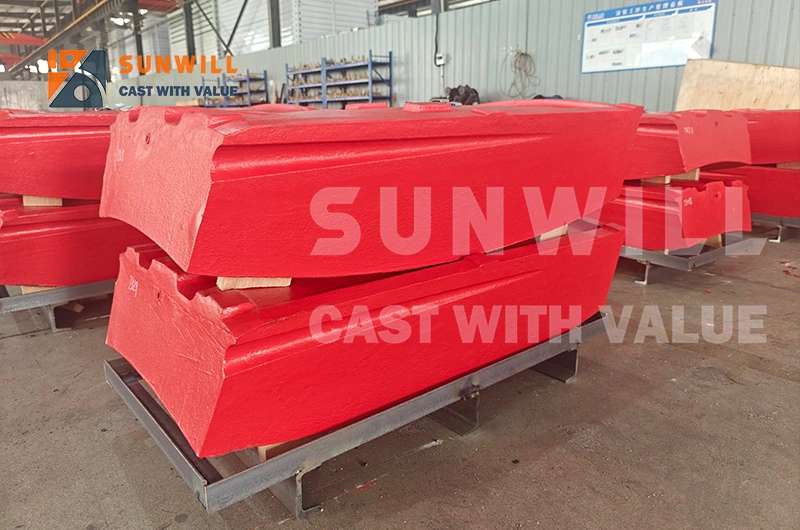
Consider a circuit where the chamber bottom wears fastest. With a monolithic liner you replace everything at the slowest wearing zone’s pace, which wastes the life left in the upper rows. With segmented concaves you replace the bottom row, keep the upper rows in service, and stretch the cost of a full set across several changeouts.
The saving is not only in steel. Every hour of unplanned downtime on a primary crusher cascades through the whole plant. Planned, partial changeouts during scheduled maintenance windows keep the crusher available when the mill or the conveyor needs feed. For many operations the downtime avoided is worth more than the liner metal saved.
There is a second economic angle: consistent chamber geometry. When all rows wear at a matched rate, the crusher holds its designed stroke and setting longer. That protects throughput and product sizing, which protects the value of everything downstream.
Concave and Mantle: One Chamber, Two Halves
It helps to be precise about the two surfaces. The mantle is the moving cone. The concave is the fixed lining we build. They work as a pair: the mantle oscillates, the concave stays put, and the gap between them does the crushing.
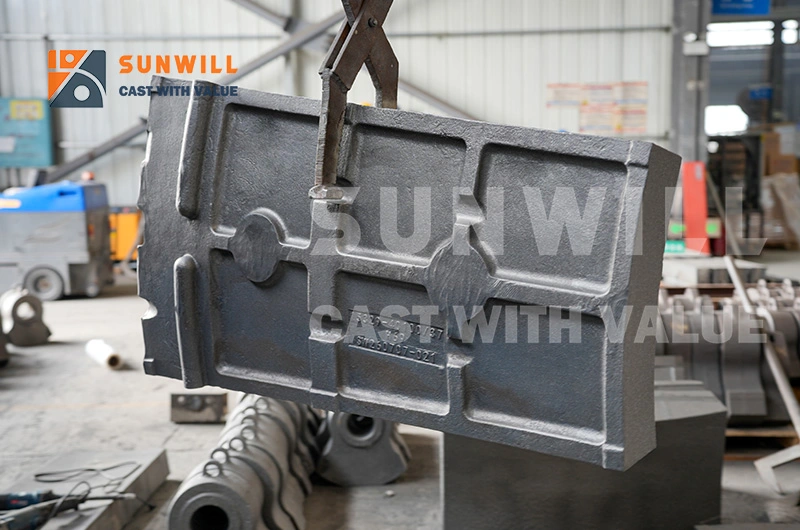
We supply the concave segments. The mantle is the moving counterpart that runs against them, and it is typically sourced and managed by the plant as a separate item. When you plan a changeout, the relationship between the two matters: a new concave paired with a badly worn mantle restores chamber geometry, but the worn mantle limits the gain. Coordinating the two surfaces is part of good liner management, even when they come from different sources.
We keep our scope honest. SUNWILL makes the fixed concave. We do not claim to supply mantles, spider caps, arm liners, rim liners, or bottom shell liners. What we do claim is depth in the concave itself, from zone analysis to grade selection to foundry control.
Profiles, OEM Fit and Chamber Options
Gyratory concaves come in many profiles. The chamber shape, the row count, and the liner thickness all change how the crusher bites and discharges. A profile that is too aggressive can overload the drive; one that is too gentle can starve the circuit.
We build concave segments to match the existing chamber of the crusher they serve. That means working from the original equipment geometry or from a worn sample, then producing segments that drop into the same location. For plants running a specific OEM chamber, matching the profile protects the performance the crusher was designed for.
In some cases a modest profile adjustment is worth discussing. If a circuit has changed its feed size or its product target since the crusher was installed, the concave profile can be revisited with the plant’s engineer. Any such change is a joint decision, not a silent modification, because chamber geometry touches the whole circuit.
How SUNWILL Builds Concave Segments
The concave is only as good as the foundry behind it. SUNWILL is an ISO 9001:2015 certified Chinese foundry. Our work on concave segments runs through the same quality system as the rest of our wear parts.
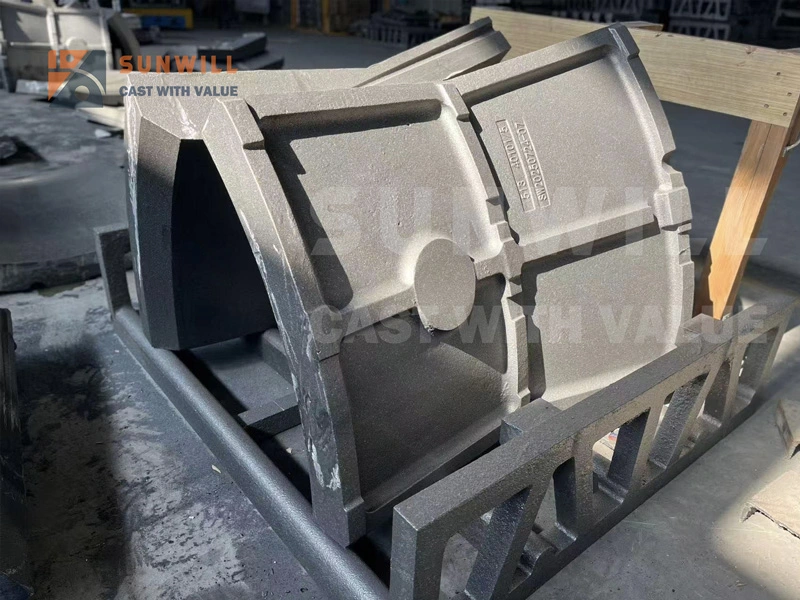
Pattern and molding are controlled so segment dimensions repeat batch to batch. Chemistry is verified against the grade specification before pouring. Heat treatment is logged and the resulting hardness is checked. Finished segments are inspected for dimensional accuracy and surface condition before they ship.
For the high chrome grades this control matters even more, because white iron is unforgiving. The Modified ASTM A532 chemistry and the heat treatment window have to be held tightly to get the hardness and the structure the throat zone needs. That discipline is what lets a high chrome bottom row survive in a place where a softer grade would wash out.
We also treat the concave as part of a wear solution, not a loose part. The grade choice, the zone split, and the changeout plan are connected. Our engineers would rather discuss your feed and your duty than quote a generic part number, because the right concave is the one matched to your rock.
Where They Run
Concave segments from SUNWILL are built for primary crushing duty in demanding circuits. The typical homes are:
- Metal ore mining, where the gyratory is the first stage and availability drives the whole mine.
- Aggregates and quarry operations, where consistent product sizing protects crusher and screen performance.
- Cement raw material preparation, where abrasive limestone and similar feeds wear liners steadily.
In each of these, the economic case for zone based concave selection is the same: match the material to the wear, replace rows on a plan, and keep the primary available.
Installation and Changeout Notes
Getting the most from segmented concaves depends on how they go in. A few field practices protect both the liner and the crusher, and they cost nothing but attention.
Clean the seating surfaces before installation. Scale, old backing compound, or crushed rock left on the shell transfers load to the wrong place and can crack a segment early. A clean, even seat lets the liner carry load the way it was designed to.
Watch segment alignment across rows. The rows should meet with a consistent joint, because a step between rows becomes a ledge that traps and pounds rock. Small misalignments at install grow into large wear patterns in service.
Plan the changeout around a worn row sample. When the bottom row is gone but the upper rows still have life, pull the worn row, measure the remaining rows, and schedule the next changeout before the next zone fails. Keeping a measured record turn by turn is the difference between planned maintenance and a surprise shutdown.
Finally, coordinate the concave plan with the mantle condition. We build the fixed concave, and the mantle is the moving surface that runs against it. Reviewing the two together at changeout restores the designed chamber and protects the gain from the new concave.
Frequently Asked Questions
What are gyratory concave segments? They are the fixed liner segments that line the upper shell of a gyratory crusher, stacked in rows around the crushing chamber. The mantle moves inside them to crush rock. SUNWILL manufactures these fixed concave segments.
How many zones does a concave have and why does it matter? We treat the concave as three working zones: upper intake, chamber mid, and chamber bottom. Each zone wears for a different reason, impact at the top and abrasion at the throat, so each row gets a material grade matched to its duty. This keeps wear even and extends service life.
Which material grades does SUNWILL use for concave segments? We use the TF grade family. Alloy steels TF40, TF50, TF55, and TF60 cover the impact and mixed wear zones. High chrome white irons TF65 and TF70, specified to ASTM A532 with a Modified qualifier, cover the abrasive chamber bottom.
Can you replace only the worn row instead of the whole concave? Yes. Because the concave is built in segments, a plant can change a single worn row during a scheduled window and leave the healthy rows in service. This saves liner cost and, more importantly, avoids unplanned downtime.
Do you supply the mantle and other gyratory wear parts? SUNWILL manufactures the fixed concave segments. We do not supply the mantle, spider cap, arm liners, rim liners, or bottom shell liners. We focus our engineering on the concave itself.
Talk to Our Engineers
If you are planning a concave changeout or comparing suppliers, send us your crusher model, your current chamber profile, and a sample of your worst worn row. We will map the three zones, propose a grade by row, and give you a changeout plan that protects both liner life and crusher availability.
SUNWILL builds wear parts with a simple promise: CAST WITH VALUE. That means the right material in the right zone, made under an ISO 9001:2015 system, priced for the life you actually get.
Contact our team at https://www.sunwillmachinery.com/contact/ to start the conversation.