
Shredder Hammer Wear Solutions: Cut Replacement Cost & Downtime in Scrap and Recycling Shredders
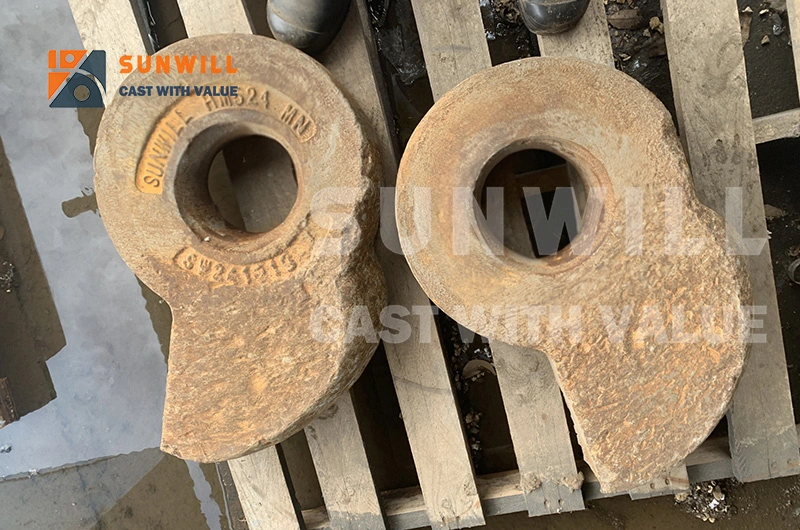
In a shredder, hammer wear is the gradual loss of shape from impact, abrasion, and unshreddable contamination. It is not a single cause, and it is paid for in lost tons per hour long before the part is gone. It is also the largest recurring consumable cost on any scrap-metal, wood, or waste-recycling shredder line. A single mid-size automotive shredder carries 40 to 100+ hammers on the rotor, and most plants replace the full set several times a year. Annual hammer consumption therefore routinely reaches into the hundreds of units.
Each change-out stops the rotor for several hours. Every stopped hour carries the same heavy lost-output cost that BDI Wear Parts documents across material-handling operations: $5,000 to $50,000+ per hour depending on scale (BDI Wear Parts, crusher downtime cost analysis).
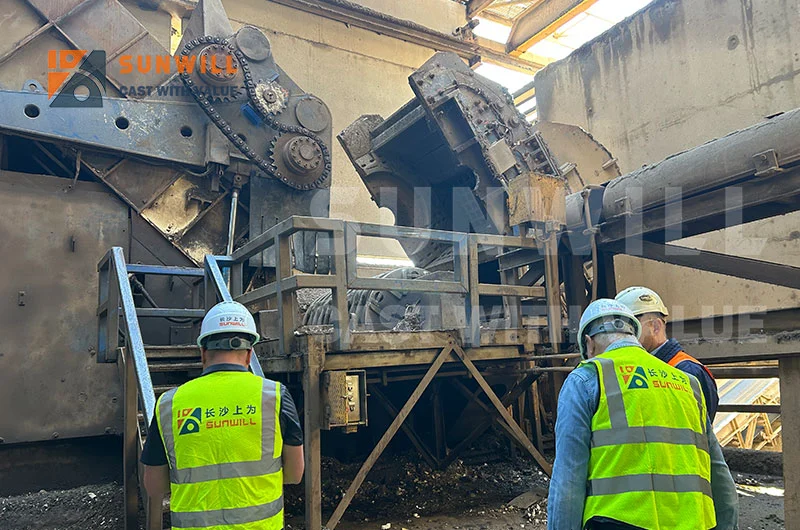
The reason why shredder hammers wear out fast is rarely the alloy alone. It is the mismatch between the wear mechanism inside the chamber and the material chosen to fight it. At its core, controlling shredder hammer wear is a material-and-maintenance decision, not just a parts purchase. This guide breaks down how hammers fail, the five wear patterns on the floor, the material fixes that move life, and a cost-per-ton model you can run. By the end, the path to increase shredder hammer life and to cut shredder hammer replacement cost should be clear. For the product side, Sunwill’s shredder hammers are engineered in alloy steel and manganese steel for exactly this duty.
Key Takeaways – Shredder hammer wear is driven by impact, abrasion, and unshreddable contamination. Hammers fail from uneven tip wear, edge rounding, cracking, pin-bore wear, and early cap loss. It is not a single cause. – Sunwill metal shredder hammers are supplied in two materials: alloy steel and manganese steel. Alloy steel – including our Bisctruct dual-structure (DHT) grade – puts a 550 to 630 HBN working face over a tough, pin-friendly installation area and delivers 2 to 3× the service life of traditional manganese; manganese work-hardens under impact and owns high-tramp metal-recycling duty. – Alloy steel hammers use Sunwill’s Differential Heat Treatment (DHT). The working end reaches 550 to 630 HBN while the installation area stays tough with minimal wear on the pin, delivering 2 to 3× the service life of traditional manganese steel (Sunwill field data / typical industry benchmarks). – The hammer is only one wear part in the chamber. Shredder anvil and grate wear, plus caps and pin protectors, set the true cost per ton. Optimizing them together cuts replacement cost more than upgrading hammers alone. – Buy on cost per ton, not unit price. Use replacement frequency × (downtime + labor) + part cost, ÷ tons produced. A manganese or martensitic / low-alloy hammer matched to the duty usually wins.
How Shredder Hammers Fail
A shredder hammer lives in the most violent environment in any recycling plant. The rotor spins at 400 to 1,200 RPM, flinging each tip against the feed at 30 to 60 m/s, and every revolution meets a different enemy: a soft slug, a hardened axle, a rock, or an unshreddable mass. Shredder hammer wear is therefore never pure abrasion and never pure impact. It is the two fighting each other while contamination decides which one wins.
Three mechanisms govern failure. Abrasive wear grinds the tip against material harder than the hammer. It is modest in metal recycling but dominant in wood, C&D, and MSW recycling, where the feed is full of grit and nails. Impact fatigue dents the hammer with every strike. Under high energy, manganese work-hardens (surface to 500+ HB while the core stays ductile), but a brittle alloy grows micro-cracks into a fracture. Contamination shock is the unshreddable object delivering a point load a brittle alloy cannot survive. This is where brittle high-chrome hammers crack, and where manganese earns its keep for severe tramp-metal shock, while martensitic / low-alloy steel suits lower-impact, abrasion-led duties.
A hammer does not truly “wear out.” It loses its shape. Once the tip rounds, throughput drops long before the hammer is gone. Much of the cost of shredder hammer wear is paid in lost tons per hour. Reading shredder hammer wear means reading the chamber, not the spec sheet.
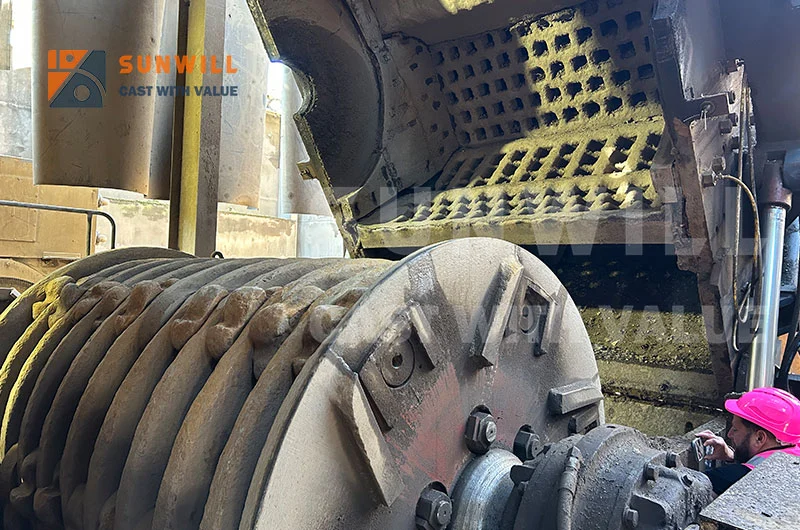
A documented recycling-plant case showed the value of a complete manganese set at a large-scale metal recycling facility in Australia. In June 2026, Sunwill delivered a full set of high-manganese wear parts to the plant: shredder hammers, spacers, moly-rich manganese grates, and anvils. The choice of manganese was deliberate. A shredder lives in a high-impact, contamination-rich world where only a work-hardening, shock-absorbing alloy survives. By supplying a complete, precision-engineered set matched to the shredder’s impact profile, the plant reduced unscheduled change-outs and kept the line running. That turned a chronic shredder hammer wear problem into a managed schedule.
The 5 Shredder Hammer Wear Patterns and Their Causes
Operators who track shredder hammer wear learn to read five distinct failure signatures on the floor. Each points to a different root cause and a different fix for the shredder hammer wear problem.
1. Uneven (one-sided) wear
One face erodes far faster than the other, from a feed bias, a worn rotor disc, or hammers never rotated. It unbalances the rotor and accelerates pin-bore damage; the fix is rotation discipline, not a harder alloy.
2. Tip rounding (edge loss)
The tip rounds and the leading edge erodes. This is the classic “lost shape” failure, where throughput falls because the hammer can no longer grip the feed toward the grate. Tip rounding is worst in high-abrasion, low-tramp feed, which is exactly the profile of wood and waste recycling.
Hammer tip wear in wood/waste recycling follows a different curve than in metal shredding. Wood, pallets, C&D debris, and MSW carry grit, sand, and nails. There is little unshreddable steel but relentless abrasion on the tip. Typical industry benchmarks from North American wood-recycling operations put tip rounding as the dominant life limiter, often forcing rotation every few hundred hours rather than every few thousand.
Hammer tip wear in wood/waste recycling is an abrasion problem first. It is the opposite of auto shredding. For procurement, budgeting for hammer tip wear in wood/waste recycling means planning rotation every few hundred hours, not thousands. The winning move is a material that holds a hard wear face at the tip without embrittling the body, such as an alloy-steel hammer with Differential Heat Treatment (DHT).
3. Cracking and fracture
A crack starts at the tip, the pin hole, or a stress riser and propagates until the hammer breaks. This is the most expensive pattern, because it can take the anvil or rotor with it. It signals a brittle alloy in a high-impact role, or a hammer run past its safe wear limit. Manganese’s crack-arresting ductile core is why it dominates metal-recycling shredders.
4. Pin-bore (pin-hole) wear
The bore that rides on the rotor pin elongates and bell-mouths; loose hammers then swing and pound the pin, spacers, and end disc. This is a fit-and-torque problem, not the alloy’s fault. Manganese resists galling better than harder steels because its surface polishes against the pin under load. The cure is correct pin fit, proper torque, and scheduled inspection.
5. Early cap and end wear
Bolt-on caps and end protectors wear through long before the hammer body. Caps are consumable by design, but premature cap loss exposes the body and shortens life. Spec caps in a matched material and change them on the same planned window as the hammer rotation.
| Wear Pattern | Dominant Mechanism | Typical Duty | Primary Fix |
|---|---|---|---|
| Uneven one-sided wear | Feed bias / no rotation | All | Rotate; balance feed |
| Tip rounding | Abrasion | Wood / waste / C&D | Alloy steel (DHT), hard wear face |
| Cracking / fracture | Impact on brittle alloy | Metal recycling | Manganese steel |
| Pin-bore wear | Fit / torque | All | Correct pin, torque, inspect |
| Early cap wear | Abrasion on cap | All | Caps in matched material |
Read the hammer and the cause names the fix. A plant fighting tip rounding in wood recycling needs a different answer than a plant fighting fractures in auto shredding. That is why studying why shredder hammers wear out fast starts with reading the hammer, not the price list.
Material Fixes for Shredder Hammer Wear
Material selection is where most of the available life lives. Two material families cover the range of shredder duties, from abrasion-led wood and waste recycling to impact-rich metal recycling.
Alloy Steel – Differential Heat Treatment (DHT)
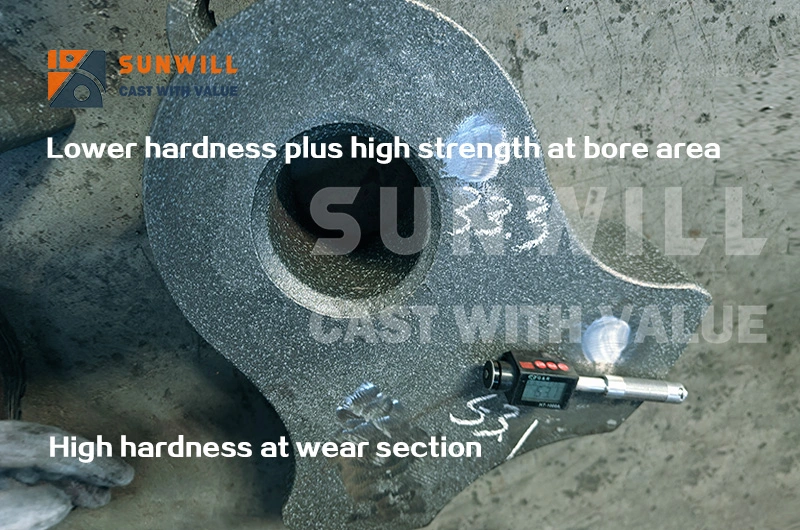
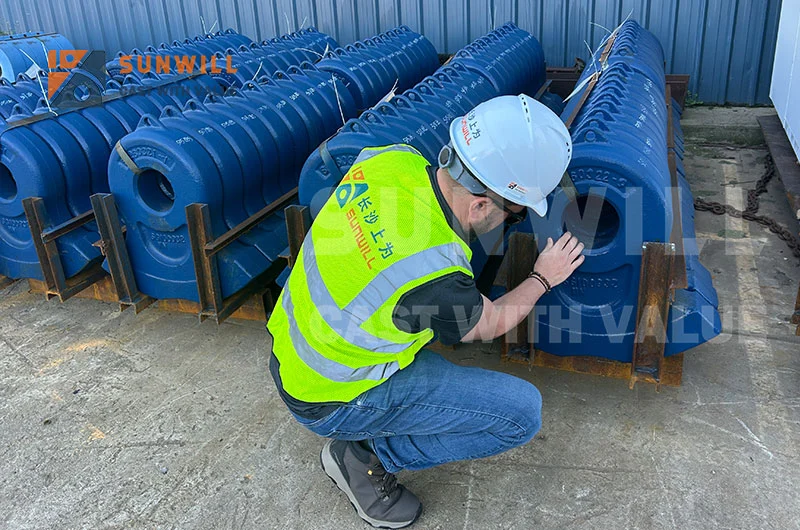
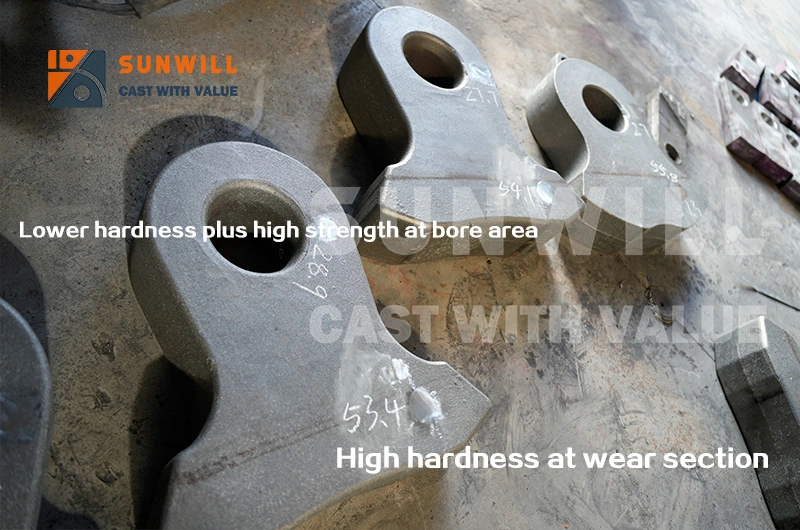
Alloy steel – including Sunwill’s Bisctruct dual-structure grade – is the higher-hardness option for shredder hammers. Through Differential Heat Treatment (DHT), the working end is hardened to 550 to 630 HBN while the installation area stays tough with minimal wear on the pin, so the hammer holds its shape and the bore stays true. That gives strong abrasion resistance for feeds where impact energy is moderate, which is why alloy steel is the right call for wood, C&D, and MSW recycling and for cleaner metal feeds where the dominant loss is tip rounding from grit and nails rather than shock from unshreddable masses. Its trade off is toughness: under very heavy tramp-metal shock an alloy-steel hammer can crack, so it is matched to duties where impact is controlled. In field use the DHT alloy-steel hammer roughly doubles service life versus traditional manganese steel, which is the headline reason plants upgrade to it. Sunwill supplies these hammers in grades tuned to the specific rotor and feed.
Manganese Steel
Delivered soft at about 200 to 240 HB (≈20 HRC), manganese work-hardens under impact: the top 2 to 3 mm transforms to 500+ HB (≈50 HRC) while the ductile core absorbs shock. That is why manganese owns high-impact, contamination-rich metal-recycling duty, where tramp iron, oversized masses, and unshreddable fragments would fracture a brittle alloy. Grades run Mn18Cr2 up to Mn22Cr3 for the most abrasive, high-impact duties. Manganese glazes (stays soft and wears fast) if the impact energy is too low, so it is matched to the impact-led end of the duty range. Metso, a global wear-parts OEM, builds much of its shredder wear parts from high-quality manganese and documents roughly doubled wear life with reinforced manganese inserts (Metso crusher and shredder wear-parts reference). Sunwill supplies manganese hammers in Mn18Cr2 and Mn22Cr3; for higher-wear applications the upgrade path is the alloy-steel DHT grade, not a treated manganese.
| Material | Typical grades | As-cast hardness | Best for |
|---|---|---|---|
| Alloy steel (DHT / Bisctruct) | Alloy steel, Bisctruct alloy steel | 550 to 630 HBN at working end (DHT) | Wood, C&D, MSW and cleaner metal feeds; abrasion-led tip wear; approx 2x life vs manganese |
| Manganese steel | Mn18Cr2, Mn22Cr3 | 200 to 240 HB, work-hardens to 500+ HB in service | Metal recycling with high impact and tramp metal; shock-rich duty |
*Sunwill metal shredder hammers are supplied in two materials. Alloy steel uses Differential Heat Treatment (DHT) to reach a 550 to 630 HBN working face over a tough installation area, roughly doubling service life versus traditional manganese steel. Manganese steel is the work-hardening option for high-impact, tramp-metal duty.
Field case: Metso alloy-hammer customers in Europe. Metso’s own product manager for Lindemann shredder parts reported that European customers running the Metso Alloy Hammer, a special cast-steel hammer from the group’s own foundry, paired with a post-treatment that holds hammer shape longer, achieved longer uptime and needed fewer hammers per year, with a measurable improvement in cost-per-ton shredding. The lesson repeats throughout this guide. Holding the hammer’s shape is what extends life, and the material plus treatment that does that is worth more than a cheap unit price when the goal is lower shredder hammer wear.
For a plant ready to act, choose alloy steel with DHT for abrasion-led wood and waste duty and maximum life, or manganese steel for high-impact metal-recycling duty. For the engineered product range, Sunwill’s shredder hammers are supplied in alloy steel (incl. the Bisctruct DHT grade) and manganese steel (Mn18/Mn22), sized for Newell, Lindemann, and Texas Shredder rotors.
Beyond the Hammer: System-Wide Shredder Wear
A hammer is one wear part in a system, and the system sets the true cost of shredder hammer wear. The biggest mistake is optimizing the hammer while ignoring its neighbors. The neighbors decide how hard the hammer has to work.
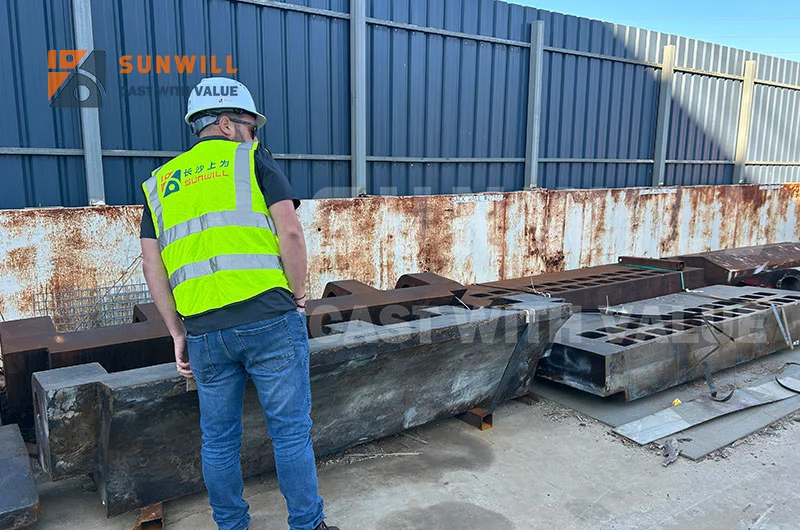
Shredder anvil and grate wear. The anvil and the grate define the clearance the hammer works against. As the grate wears open, product size grows and the hammer stops doing useful work; as the anvil wears, the impact geometry drifts. Worn grates and anvils force the operator to run hammers past their optimum point, accelerating tip rounding. Moly-rich manganese grates, the grade Sunwill supplied to the Australian plant, resist both abrasion and impact in this zone. Treating shredder anvil and grate wear in the same budget as shredder hammer wear is what separates a managed cost-per-ton from a crisis.
Caps and end protectors. Caps are consumable by design. Spec them in a matched material and change them on the same planned window as the hammer rotation.
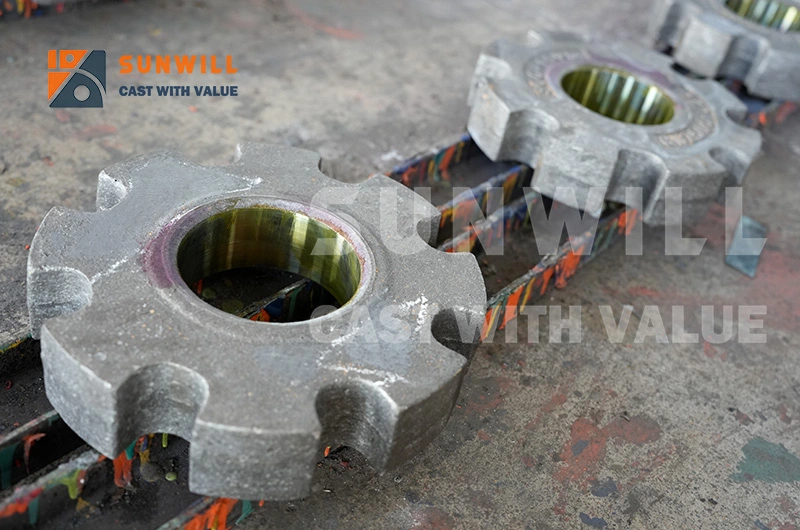
Pin protectors and spacers. Loose or worn pins let hammers swing, pumping impact energy into the rotor end discs instead of the feed. Pin protectors in a wear-grade material, inspected on a schedule, prevent the cascade from hammer wear to rotor damage.
Chute and housing liners. The infeed chute and lower housing take sliding abrasion from returning material. Here the same composite logic applies. Bimetallic wear plates for chutes, a tough steel base under a chromium-carbide wear face, outlast mild steel by up to 12 to 20× in sliding abrasion and remove a recurring shutdown source.
Instead of asking which hammer is cheapest, the plant should ask which combination of hammer, grate, anvil, and liner gives the lowest cost per ton across the whole chamber. That is the question Sunwill’s application review answers. It is also why Custom-Made Wear Parts, a full matched set built to the shredder’s drawings, often beats a cart of mixed catalog items when the objective is a lower wear cost per ton. Scheduling shredder anvil and grate wear alongside the hammer turn is the cheapest insurance against a surprise stop.
Operating Practices That Extend Shredder Hammer Life
Material sets the ceiling; operation decides how close the plant gets to it. Good practice is what turns a material upgrade into measurable gains in shredder hammer wear life. Five practices move real life out of any hammer.
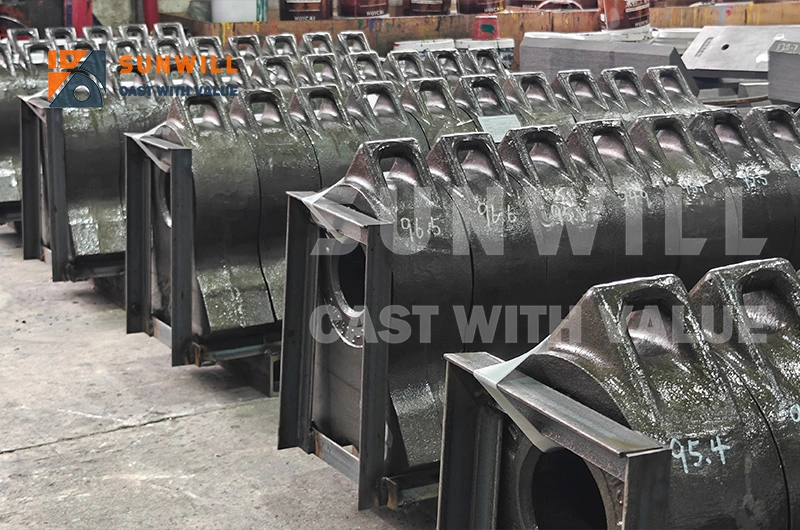
1. Rotate, don’t run to failure. Most hammers present two or more wear faces. Flipping them on a set hour schedule uses the paid material and keeps the tip geometry aggressive. A hammer pulled at 40% remaining and flipped outlives one run to 10% and scrapped.
2. Control the feed. Oversize loads, tangled wire, and unshreddable masses are what crack hammers. Pre-shredding bales and ELVs, as Metso promotes with its Lindemann pre-shredders, drops unshreddables into the main chamber and protects both hammers and rotors. Upstream magnetics and air separation keep the chamber doing size reduction, not sorting.
3. Match RPM and feed rate. Tip speed sets impact energy. Too fast in a high-tramp feed and even manganese sees excessive shock; too slow and the hammer glazes. Start from the OEM curve for the specific rotor, then adjust by wear data.
4. Inspect pins and bores every rotation. Pin-bore wear is cheap to catch and ruinous to miss. A bore-gauge reading at each rotation predicts the next failure before it strands the line.
5. Track tons per set. Tons per set is the only honest measure of shredder hammer wear across a season. The only metric that proves a material or practice worked is tons produced per hammer set. Plot it, and the life gain from an alloy-steel hammer with DHT becomes a number procurement can price.
Industry field reports suggest a regional wood-and-C&D recycler in the U.S. Southeast processing pallets, demolition wood, and land-clearing debris was burning through low-alloy hammers every few hundred hours to tip rounding, then stopping the line for change-outs. Switching the tips to an alloy-steel hammer with Differential Heat Treatment (DHT, Sunwill’s Bisctruct grade) and tightening the rotation interval lifted measured life into the 1.5 to 2× range versus the prior plain alloy and converted several unplanned stops per month into a planned quarterly window. The gain came not from a miracle alloy but from matching the wear mechanism, abrasion-dominated tip wear, to a material that holds a hard face without embrittling the body. That is the core move to reduce shredder hammer wear in this duty.
These practices are what let a plant increase shredder hammer life without spending a cent on a premium part. Combined with the right material, they turn a cost center into a managed line item. Plants in the recycling industry wear parts segment see the same pattern across metal, wood, and MSW duty.
Calculate the True Cost of Shredder Hammer Wear
Buying hammers on unit price is the error that costs the most. A manganese hammer and a DHT alloy-steel hammer are not the same purchase. They deliver different tons before failure and they carry different downtime. The framework any plant can run is straightforward:
Cost per ton = (Part cost + Change-out downtime cost + Labor cost) ÷ Tons produced
The price gap is real but bounded. Across typical duty a DHT alloy-steel hammer carries roughly a 90% higher unit cost (about 1.9× the manganese price) while delivering 2 to 3× the service life. The exact ratio tracks the feed: the more tip-abrasion-led the duty, the wider the life gap in favor of the alloy.
Illustrative worked example (mid-size shredder, mixed automotive and scrap, ~80 t/h). Run on the cost-per-ton framework above, with a DHT hammer priced about 90% above manganese and delivering roughly 3× (≈300%) the service life:
| Metric | Manganese steel | DHT alloy steel (Bisctruct) |
|---|---|---|
| Set price | $4,000/set | $7,600/set (≈90% higher) |
| Life per set | 2 days | 6 days (≈3×) |
| Sets per year (365 d) | 183 sets × $4,000 = $732,000 | 61 sets × $7,600 = $463,600 |
| Annual parts cost | $732,000 | $463,600 (≈37% lower) |
| Change-out downtime (4 h/set at $2,800/h) | 183 × 4 × $2,800 = $2,049,600 | 61 × 4 × $2,800 = $683,200 |
| Total annual saving | $268,400 (parts) + $1,366,400 (downtime) = $1,634,800 | |
In this duty the DHT alloy delivered about 3× the manganese life (6 days versus 2 days), squarely inside the 2 to 3× typical range, because the feed and duty favored a hard, stable wear face. The headline is not the multiple. It is that a 90% higher invoice collapsed into a 37% lower parts bill and a seven-figure downtime saving once change-out frequency fell with it.
The multiplier that decides the return is downtime, not the part. BDI Wear Parts places lost output from stopped material-handling equipment at $5,000 to $50,000+ per hour and ranks wear parts run too long as the #1 cause (25 to 35%) of unplanned downtime events (BDI Wear Parts, crusher downtime cost analysis). A single shredder change-out that ties up the rotor for 6 to 12 hours, even at a conservative $5,000/hour, costs $30,000–$60,000 in lost production per stop. Fewer change-outs means fewer stops, and the part premium disappears inside the first one.
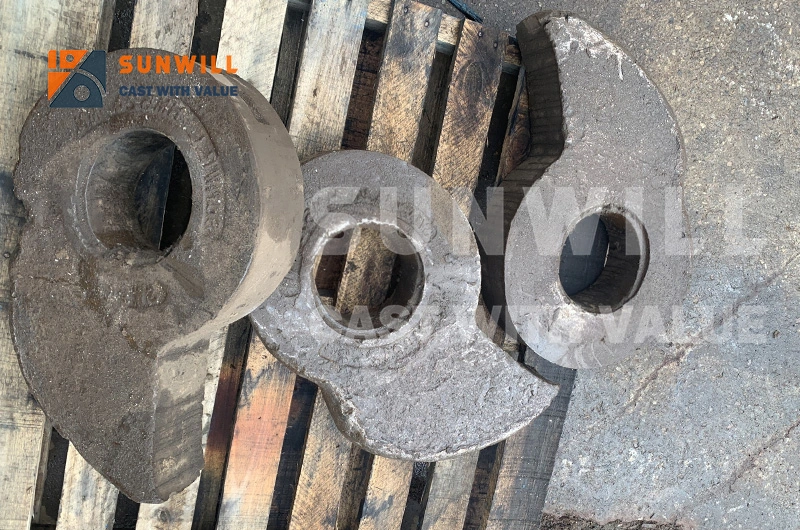
The shredder hammer replacement cost that matters is never the invoice. It is the invoice plus the stopped hours plus the labor, divided by the tons the hammer actually produced. This single ratio justifies every material upgrade to procurement, and it is the number Sunwill’s engineering team builds into a wear-part analysis.
FAQ
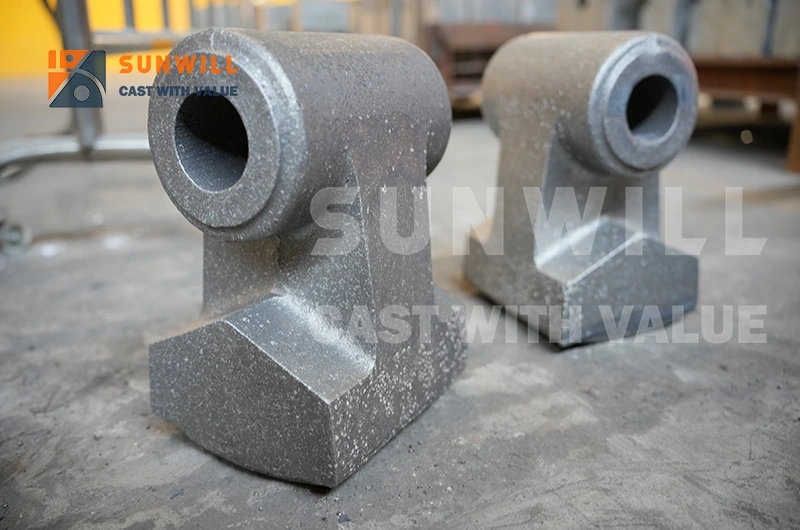
Why do shredder hammers wear out fast? Shredder hammers wear out fast because they face three mechanisms at once: abrasion on the tip, impact fatigue from every strike, and shock from unshreddable contamination. Most plants mismatch the alloy to the dominant mechanism. In metal recycling the killer is impact plus tramp steel, which cracks brittle alloys. In wood and waste recycling it is abrasion-driven tip rounding. Reading the wear pattern on the floor names the cause, and the cause names the fix.
What is the best material for mixed-scrap shredder hammers? For mixed scrap and auto shredding, Manganese steel is the baseline because it work-hardens from ~200 HB to 500+ HB under impact and arrests cracks instead of propagating them; alloy steel with Differential Heat Treatment (DHT) is the choice for cleaner, abrasion-led feeds and for maximum life. Where tip wear is extreme, the upgrade path is the alloy-steel DHT grade – its 550 to 630 HBN working face over a tough core delivers 2 to 3× the service life versus traditional manganese, without the brittleness risk. For any duty, the material that best resists shredder hammer wear is the one matched to the dominant mechanism, not a catalog default.
How often should shredder hammers be rotated or replaced? Rotate hammers on a fixed operating-hour schedule, typically when one wear face has reached roughly 40 to 50% of its original thickness, and flip to the second face rather than running to failure. Replace the full set when the tips have rounded to the point that throughput drops or the bore shows elongation. Track tons produced per set. That metric, not calendar time, should set the pull date. Pins and bores should be gauged at every rotation.
What is the true cost of shredder hammer replacement? The true cost is (part cost + change-out downtime cost + labor) ÷ tons produced. A manganese hammer at $4,000/set changed roughly every 2 days can cost far more than a DHT alloy-steel hammer at $7,600/set changed every 6 days (about 3× the life, or roughly 300%), once the stopped-hour cost (BDI Wear Parts cites $5,000 to $50,000+ per hour of lost output) is included. In worked examples the higher-priced hammer cut annual parts cost by roughly a third and downtime by seven figures. The premium hammer that collapses change-out frequency usually wins on cost per ton.
Conclusion
The cheapest hammer is rarely the cheapest hammer. Shredder hammer wear is solved not by buying the hardest or the cheapest alloy. It is solved by matching the material to the dominant wear mechanism in the chamber. Manganese steel serves the impact-and-contamination world of metal recycling. Martensitic / low-alloy steel serves the abrasion-dominated tip wear of wood and waste recycling. The five wear patterns, uneven wear, tip rounding, cracking, pin-bore wear, and early cap loss, each name their own cause and cure.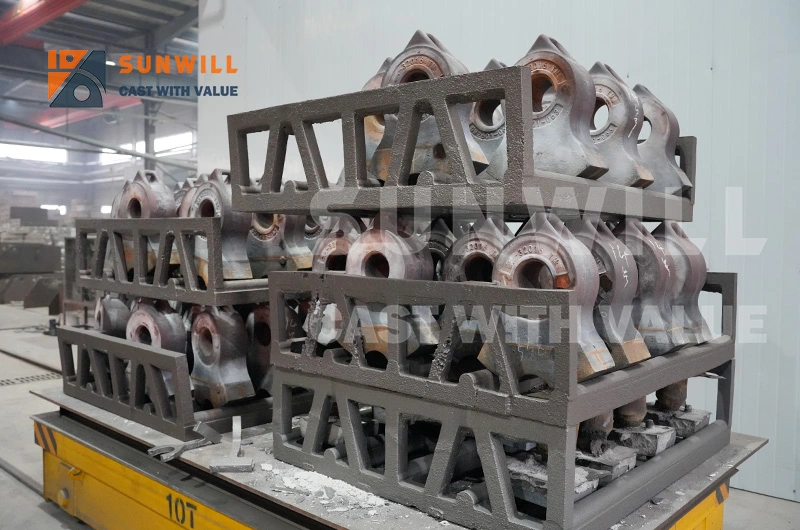
Best-in-class plants treat the hammer as one part of a wear system. Anvil and grate wear, caps, pins, and chute liners all set the true cost per ton. And they calculate that cost honestly: replacement frequency × (downtime + labor) + part cost, divided by tons produced. That is why a manganese or martensitic / low-alloy hammer matched to the duty, and halving change-outs, almost always beats a bargain bar.
Operations ready to cut shredder hammer replacement cost and increase shredder hammer life can start with Sunwill’s shredder hammers, engineered in alloy steel (incl. the Bisctruct DHT grade) and manganese steel (Mn18/Mn22) for Newell, Lindemann, and Texas Shredder rotors.
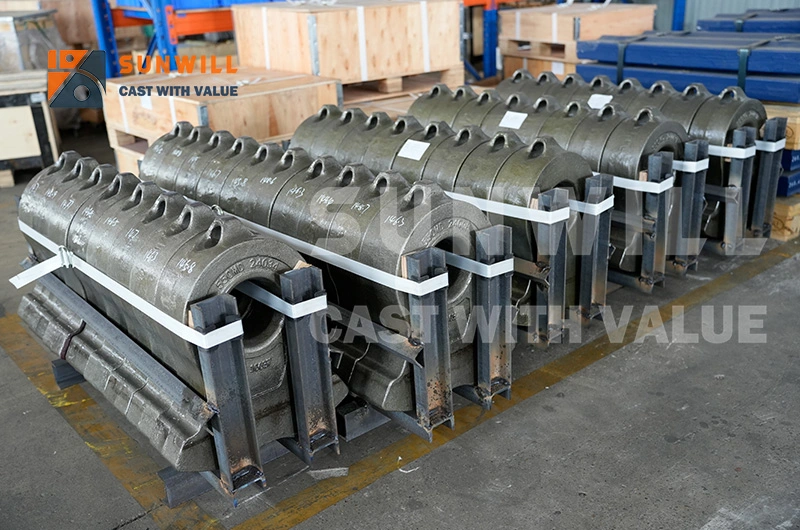
Sunwill is an ISO 9001:2015 certified foundry with 20+ years in wear-resistant castings and the in-house metallurgy to back the claims above. The 15,000㎡ production base runs 8,000 tonnes of annual capacity, and wear parts ship to 40+ countries, covering alloy steel (incl. DHT / Bisctruct grades) and manganese steel. Every order begins with an application review, feed chemistry, contamination risk, rotor model, and throughput, so the metallurgy matches the duty, not a catalog default.
Contact Sunwill’s technical team for a personalized shredder wear-part analysis and a free hammer specification sheet built for the specific chamber. To see how the composite structures are built, review Sunwill’s our composite technologies, or browse the full range of recycling industry wear parts.